
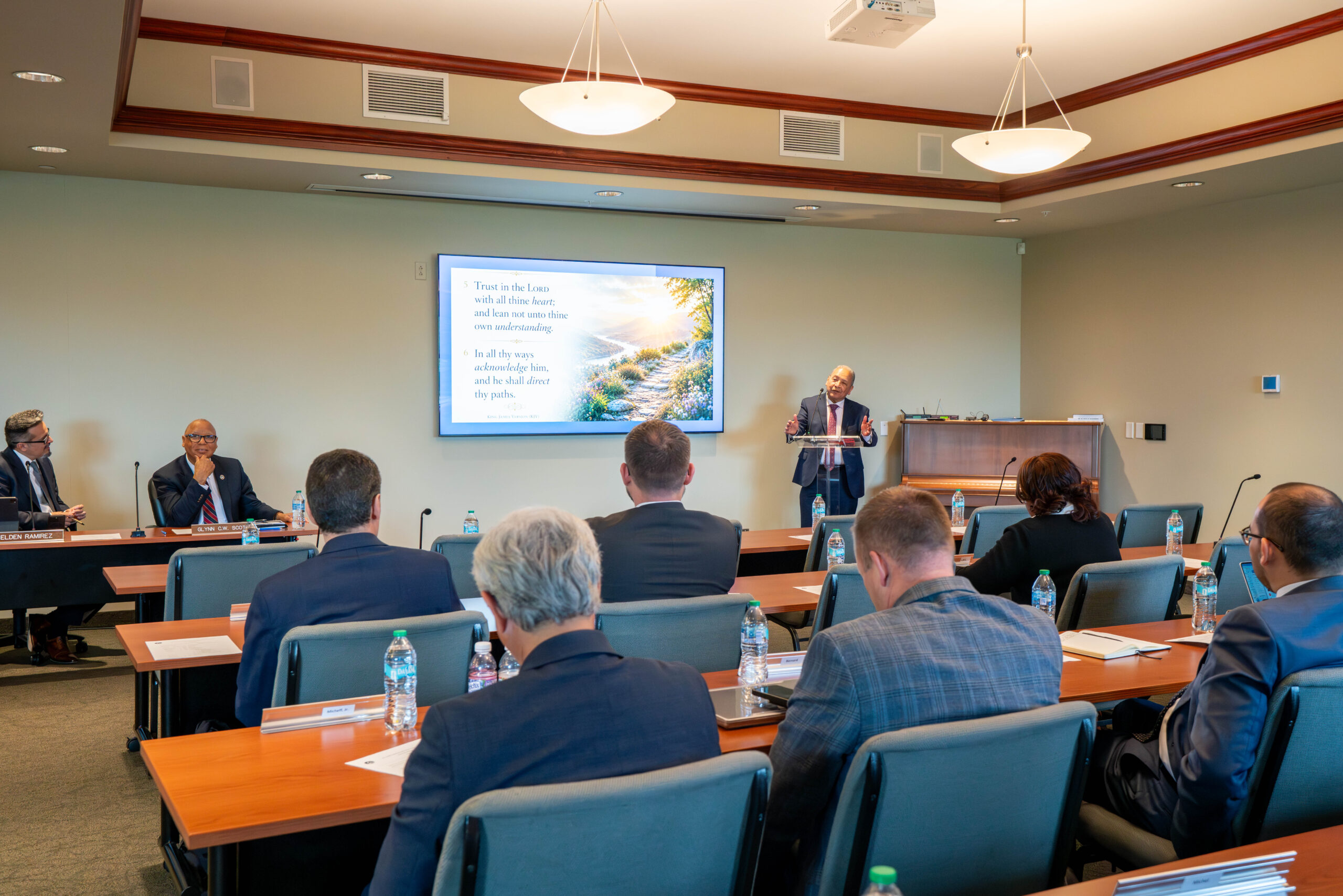
On Wednesday, May 6, the Lake Union executive committee convened in Berrien Springs, Michigan for the second of three meetings held annually.
The 37-member committee includes representatives from the five conferences who are tasked with helping to develop and direct the work of the church in the Great Lakes region. Members include local conference administrators, church employees, lay leaders, as well as the presidents of Andrews University and UChicago Medicine AdventHealth.
As president of the Lake Union, Elden Ramirez chairs the meeting, which is focused on the day-to-day work, as well as the long-term strategies for fulfilling the mission of the Seventh-day Adventist Church.
Below are highlights from the reports:
PRESIDENT’S REPORTS
Lake Union
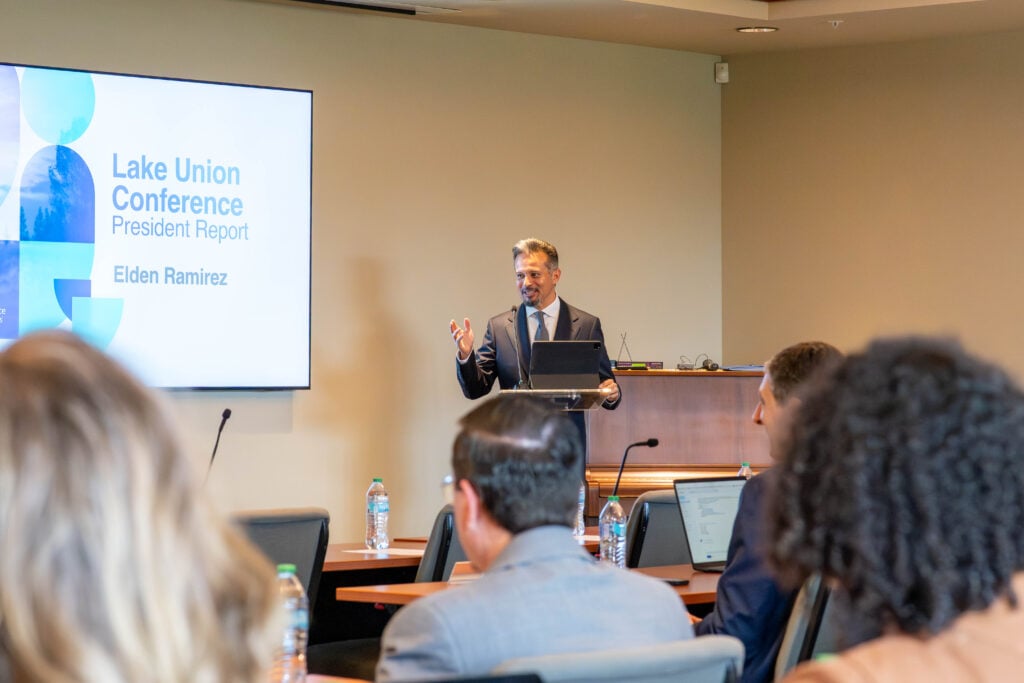
Lake Union President, Elden Ramirez, highlighted several initiatives and developments taking place across the Union and throughout the North American Division.
Among the items shared was the Lake Union Administration’s decision to recommend a special allocation of $52,000 in support of Oakwood University and to request action from the Lake Union Executive Committee. In addition to the regular appropriations provided to our educational institutions, the Lake Union Administration felt impressed to provide further assistance to the university and its mission.
“Oakwood University is a Division institution and therefore part of our broader church family,” said Ramirez. “We are grateful for the ministry and educational impact of Oakwood, especially for the students from our Lake Union territory who have chosen to pursue their education there.”
Ramirez also shared updates from several committees and boards on which he serves throughout the Division. Among those updates was the recent action by the Loma Linda University Health Board of Trustees to appoint Anthony Hilliard, MD, FACC, as president of Loma Linda University Health.
Additionally, the Executive Committee was informed of ongoing conversations taking place across the North American Division regarding the financial realities presently affecting local conferences. These discussions include exploring ways to strengthen the long-term sustainability of ministry and mission in light of increasing operational pressures faced by conferences across the territory.
Ramirez noted that rising property and healthcare insurance costs, along with other economic challenges, have created significant pressures for many organizations throughout North America. As a result, some conferences have already implemented difficult measures in an effort to remain financially responsible while continuing to advance the mission of the Seventh-day Adventist Church. He emphasized the importance of continued collaboration, prayerful dialogue and responsible stewardship as leaders seek thoughtful solutions for the future.
Andrews University
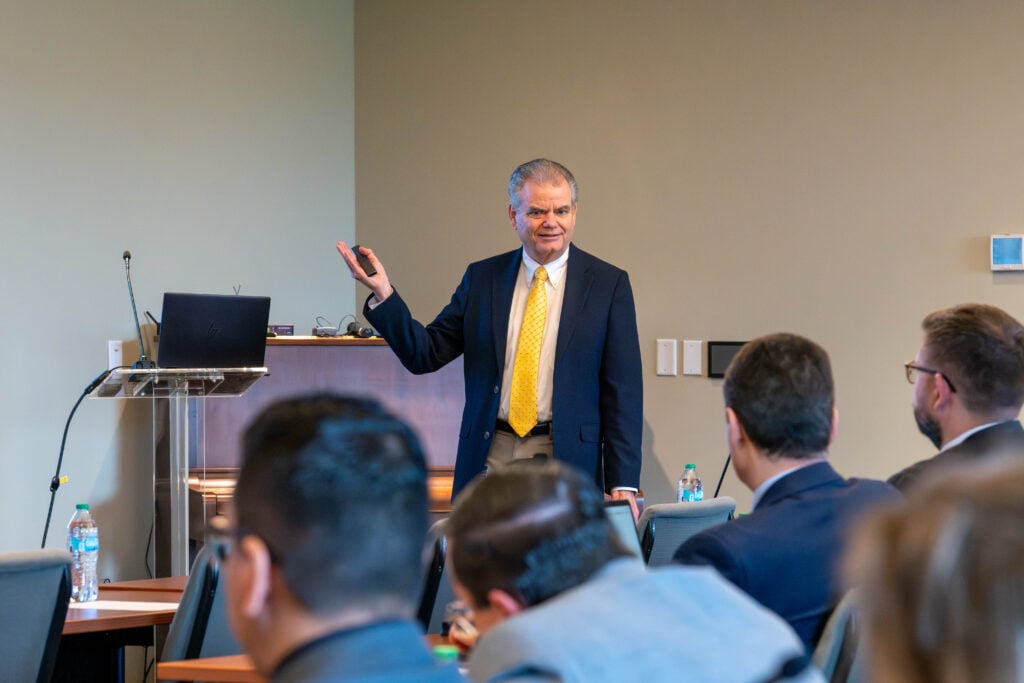
Among various highlights, Andrews University President John Wesley Taylor shared how a group of Andrews University students set out to help revive struggling churches by engaging young people in worship, service and community evangelism.
They found a small church about 30 minutes north of Andrews University in Covert, Michigan. When they arrived, the church’s regular attendance was about four older members. The students saw it as an opportunity, that it could become a “Covert mission.”
Weekend after weekend, the Andrews students began showing up. They participated in church services, visited people in the community and organized outreach efforts. One of their first major initiatives was a Christmas program, which they used as a way to invite neighbors and reconnect the church with the surrounding community.
Then the students decided to reach out to the local public school, believing the church needed young people. They invited high school students to attend church, and to their surprise, the students came. The Andrews students quickly involved them in worship, having them read Scripture, participate in singing and take part in the life of the church.
Taylor said that just a few weeks earlier, the church held a special youth Sabbath. Several young people from the community attended, and when an appeal was made, eight of them responded. The story illustrated how Andrews students helped breathe new life into a small Michigan church by showing up consistently, building relationships and empowering local youth to participate.
Indiana Conference
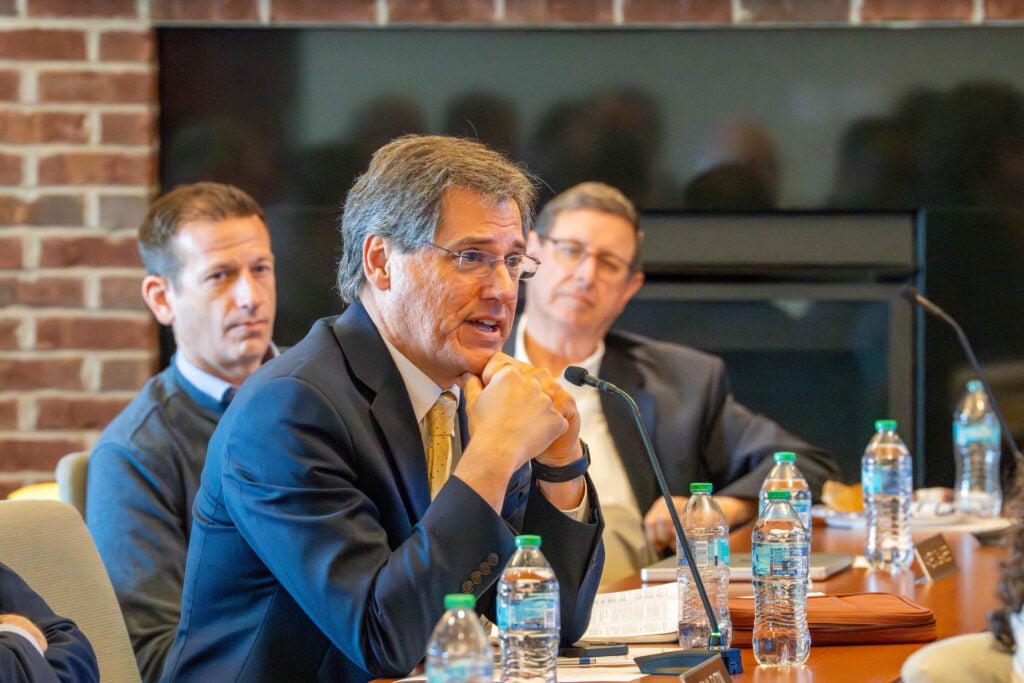
Indiana Conference President Vic Van Schaik reported that the conference is preparing for camp meeting in early June, with the theme “Threads of Grace, the Fabric of Family.” He said the theme was chosen to emphasize the importance of strengthening families, especially in the current times. Speakers will include Ty Gibson and Pavel Goia.
Van Schaik also expressed appreciation for Three Angels Bookstore, which continues to provide materials for many camp meetings across the Lake Union.
A major part of his report focused on Timber Ridge Camp and what he described as God’s providential timing. The Indiana Conference received a $1 million grant from the Lilly Foundation to address infrastructure needs at the camp, including long-delayed septic field upgrades and unfinished cabins. The conference also received approval for a second grant of $351,000, which requires a 50/50 match, for additional projects such as adding a deck to the cafeteria, adding bathrooms and renovating the cafeteria.
Van Schaik said the funding came at a critical time. For four or five years, the conference had been trying to secure health department approval for the camp’s septic design, which prevented new cabins from being used. The septic upgrade was expected to cost about $900,000, far beyond what the small conference could afford.
He said the Lilly Foundation’s invitation to apply for the grant felt like a sign of God’s leading. Though the delay had been frustrating, Van Schaik said the timing now appears providential because the conference is close to final approval and the funding is in place to complete the project. He described the grants as “a miracle of God” and gave thanks for God’s goodness, grace and provision.
Lake Region
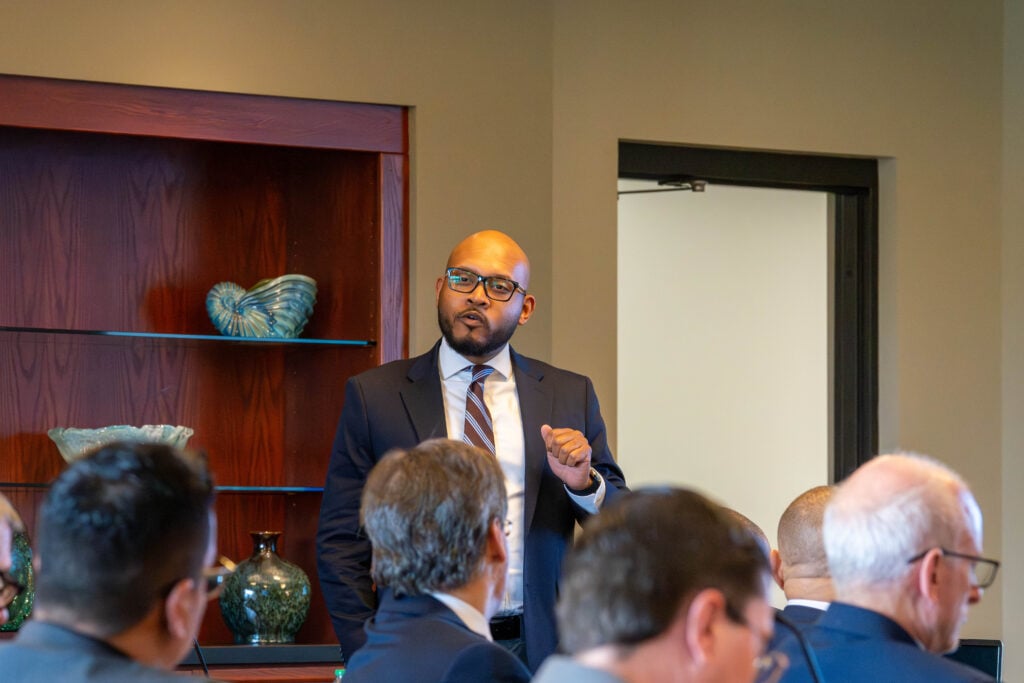
A major emphasis of the report was the conference’s spring partners meeting in Chicago, which brought together more than 100 pastors, educators and office staff. The meeting began with recreation, including bowling, Topgolf and board games, to build relationships across generations of pastors and educators. One of the most meaningful moments, he said, was seeing older and younger pastors praying for one another in the hotel lobby.
The conference also partnered with AdventHealth during the meeting. Pastors visited the hospital to pray blessings over the hands of nurses, doctors and staff, and participants helped restock a micro-pantry. Henry said the food was gone within 10 to 15 minutes each day, requiring additional store runs to meet the need. Workshops during the meeting addressed community outreach, courageous leadership and appropriate uses of AI in sermon writing.
An invitation was made to join Lake Region for camp meeting with the following speakers: Northeastern Youth Director Paula Olivier, Bermuda Pastor Richard Martin and North American Division Vice President Calvin Watkins.
Henry closed by reiterating his strong commitment to Adventist education, calling it one of his central priorities as president. He challenged pastors to keep Adventist education on church board and business meeting agendas, preach about it and help members see its importance. His vision is for Lake Region schools to become centers of community life, offering services such as career closets, career fairs and English as a second language classes so that people of every age can see the school as “my school.”
Vice President for Multicultural Ministry
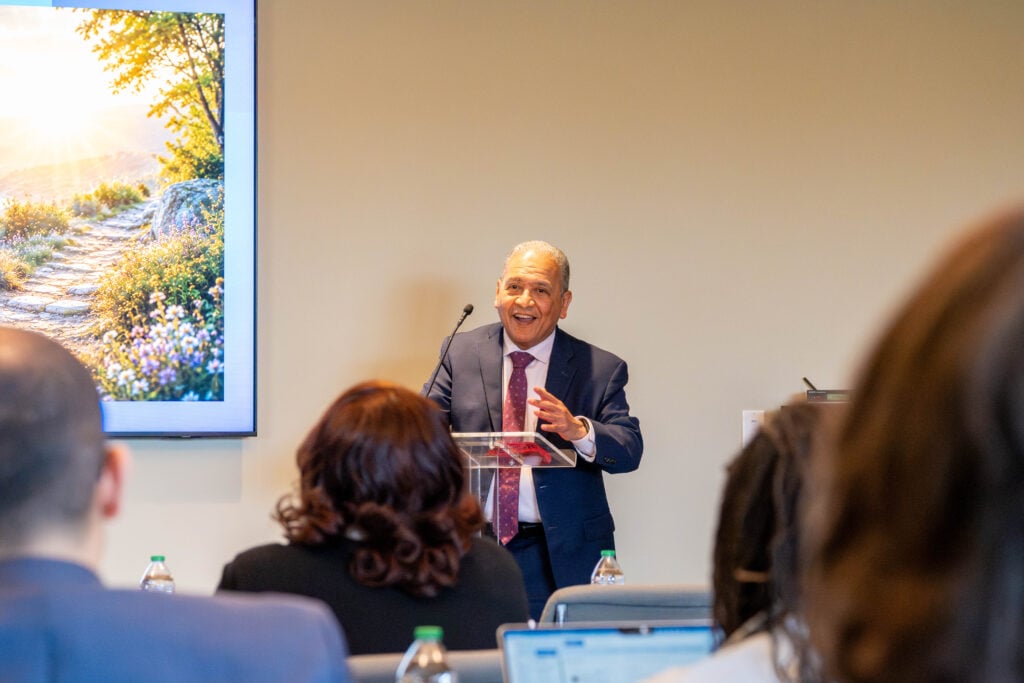
Lake Union Vice President Carmelo Mercado highlighted several recent mission and multicultural ministry initiatives across the union, including on the ASI “Sharing Christ in the Marketplace” event in Troy, Michigan. Mercado praised ASI’s focus on mission, community service and sharing Christ. He noted that John Bradshaw preached, participants went into the community, distributed 200 copies of The Great Controversy and returned with eight Bible study interests. The event also raised funds for four ministries, including one in Milwaukee serving refugees. Next year’s ASI event is planned for Wisconsin.
Mercado also celebrated the growth of Latino representation at Andrews University through AULA, the Andrews University Latino Association. He said it has been eight years since Lake Union partnered with AULA and expressed gratitude to see Latino students and professors being recognized. He said it had long been his dream to see more Latino students and greater diversity, and he praised God that the ministry continues to thrive.
Mercado then introduced the work of a committee, which has developed an online immigration resource hub. The site, immigration.lakeunion.org, offers resources for people facing immigration issues, ways for others to help, information for churches and pastors, state-by-state resources, legal and advocacy links, and a confidential prayer wall where people can submit requests anonymously. The project was developed through collaboration among Lake Union, conference representatives and support from the North American Division.
Mercado said the resource is especially needed because many immigrants, including Hispanic, Haitian and other members, are living with uncertainty about deportation and their future in the country. He emphasized that the church should show concern and provide support for people going through crisis.
He closed this portion of the report by mentioning an emerging ministry opportunity at a correctional facility in Baldwin, Michigan, where Pastor Bob Benson from the Michigan Conference felt impressed to reach out to detainees. Mercado described it as something that “dropped” into their hands, showing another way God is opening doors for ministry to vulnerable populations.
Secretariat
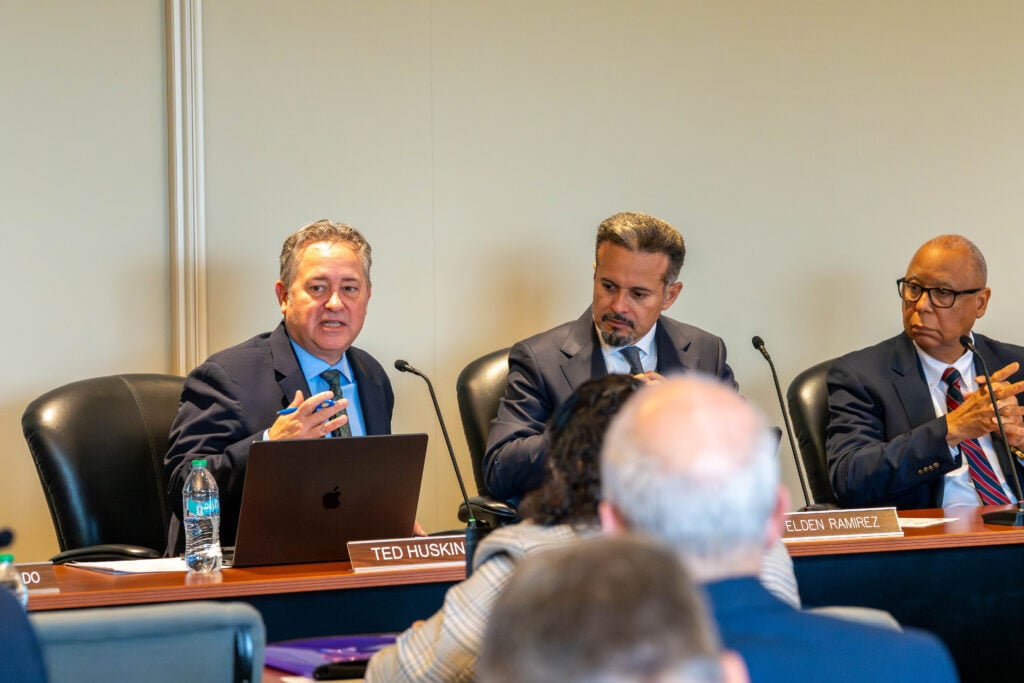
In his statistical report, Huskins said Lake Union membership was up slightly through the first quarter of 2026, following a strong year in 2025 connected with Pentecost 2025. However, he focused attention on age demographics, noting that baby boomers remain a much larger share of membership than millennials. He warned that unless younger generations are reached and retained, the church could see significant membership and attendance declines in coming decades.
Despite the challenge, Huskins said he is not discouraged. He emphasized that reaching millennials, Generation Z and Generation Alpha will require prayer, intentional planning and the outpouring of the Holy Spirit. He said responsibility for this work belongs to every area of church leadership, including education, youth ministry, higher education, ministerial, treasury, secretariat and administration.
He also reported that the Lake Union gained 1,818 members in the first quarter of 2026, with growth noted in areas such as Southwest Michigan/South Bend, Chicagoland, Central Michigan and Detroit. Baptism data showed that the majority of those baptized were under age 29, which he described as hopeful, especially in light of intentional discipleship efforts at Andrews University.
Huskins then presented three ordination recommendations and one commissioning recommendation, all connected with Lake Region Conference. The committee voted to approve the ordinations of pastors Thorly James, Chaka Samuel and Daniel Verdusco, and the commissioning of Chaplain Ashley Daniels.
Treasury
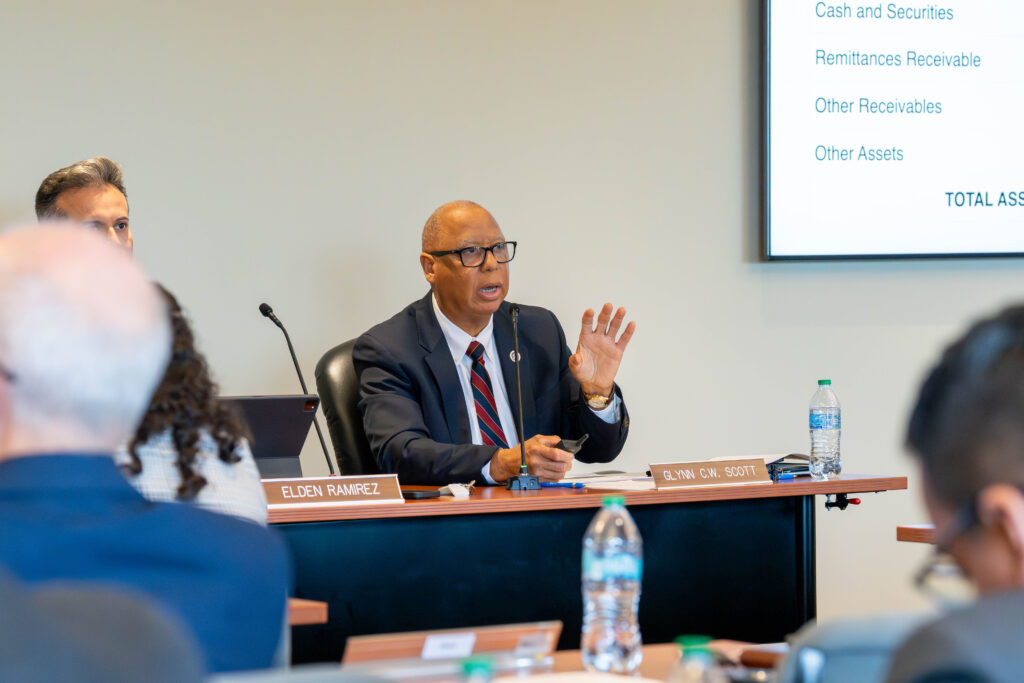
Lake Union Treasurer Glynn Scott reported that the union remained financially stable through March 2026, with year-to-date tithe totaling $20.1 million, a slight 0.11% increase compared with March 2025. The 2026 budget was built conservatively, using a breakeven projection based on 97% of the prior year’s tithe.
Scott said total assets stood at $17.8 million, up $231,000 from March 2025, largely because of carry-forward cash balances and unrealized market gains. Total liabilities were $3.7 million, down $456,000 from the previous year, due in part to lower contributions to the NAD Retirement plan and Lilly Grant expenditures.
Total income was $3.7 million, which was $589,000 under budget, mainly because of donor-restriction releases, GCAS audit subsidy and investment income coming in below the weighted budget. Expenses totaled $3.4 million, which was $920,000 under budget, with travel, program expenses and medical costs all lower than expected.
Overall, the Lake Union recorded a $193,000 operating gain for March 2026, performing $331,000 better than budget. Scott expressed gratitude for members’ faithful giving and reaffirmed the union’s commitment to supporting mission and ministry across the territory and beyond.
Debbie Michel serves as Lake Union Conference Communication director and Herald editor.