
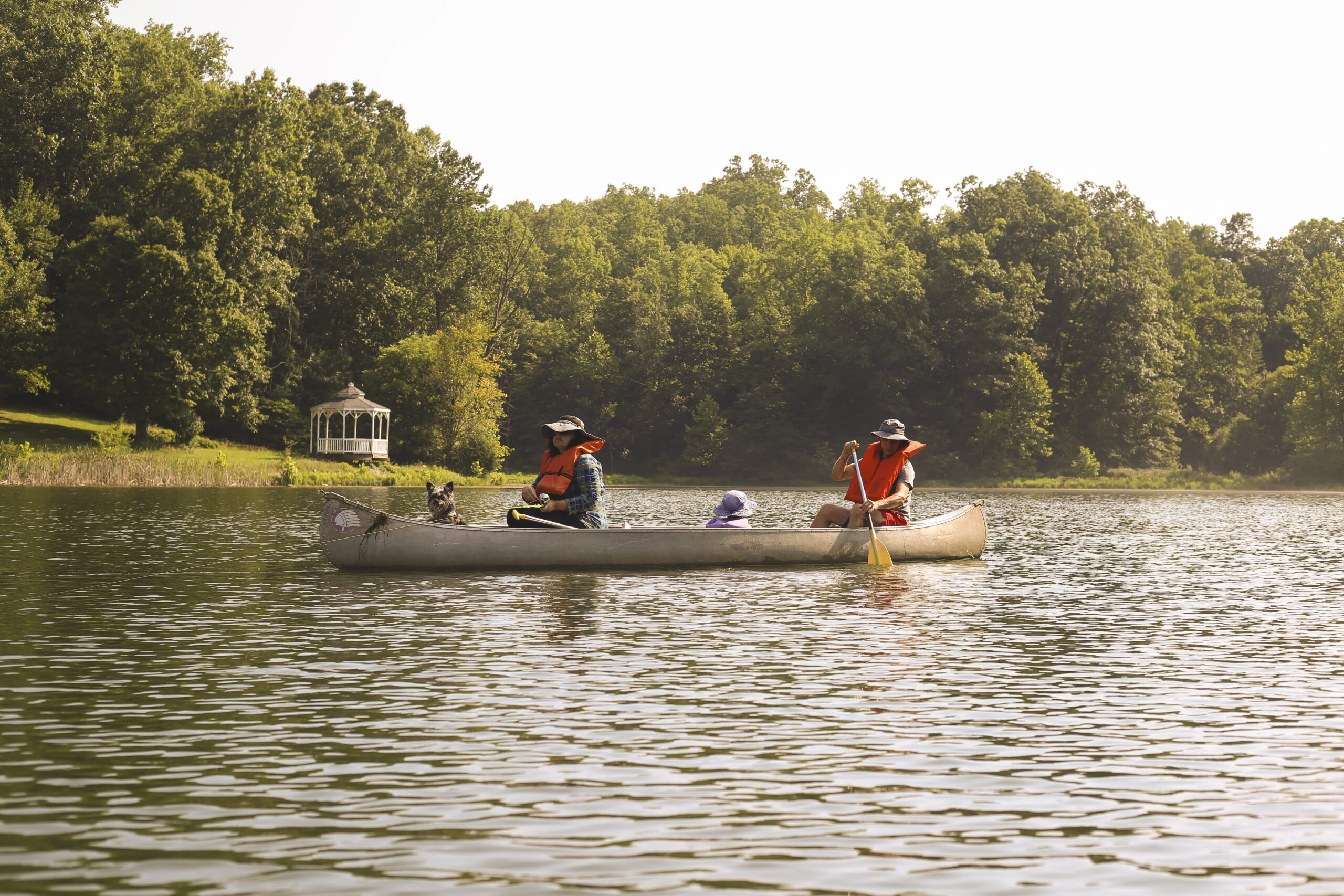
There he stood, excited, nervous, and wide-eyed all at once. His backpack bulged with neatly folded clothes, his water bottle swung from the side like a badge of readiness, and his snacks were packed with the careful precision of a young explorer preparing for his first great expedition. It was my son’s very first trip to summer camp. I can still picture him stepping toward the cabin, glancing back at me with a mixture of courage and uncertainty. In that moment, he was not just going on a trip; he was stepping into a world that would stretch him, shape him, and leave fingerprints on his faith and character in ways neither of us could yet imagine.
Fast forward a few years. The same boy who once clutched his sleeping bag with anxious anticipation returned to camp with a very different posture. He was no longer a nervous first-timer; he was a leader. That summer, he was responsible for the water activities at Big Lake Camp in Oregon, guiding younger campers through the same experiences, challenges, and joys that once shaped him. Watching him step into leadership– confident, capable, and compassionate– it felt like witnessing the full circle of spiritual formation in motion.
The transformation is striking, but for those familiar with Adventist children’s and youth ministry, it is not surprising. Within our children and youth ministry ecosystem, few experiences function as powerfully, or as consistently, as a rite of passage quite like summer camp. It is the place where timid children discover courage, where friendships form around campfires, where faith becomes personal, and where future leaders often take their first steps toward service.
But this raises an important and unavoidable question for parents, pastors, and youth leaders alike: What lasting impact does summer camp actually have on a young person’s faith, development, and leadership trajectory? Beyond the fun, the games, and the weeklong excitement, does the experience truly shape who they become?
What began generations ago as a simple outdoor retreat has grown into one of the most enduring and influential ministries in the Adventist Church. For at least one week, sometimes longer, campers step into a community intentionally crafted for spiritual growth, relational connection, and personal discovery. Every summer, thousands of children across North America have packed their bags, hugged their parents goodbye, and headed to their local Adventist summer camp.
From sunrise worships to late-night cabin conversations, every moment is designed to nurture faith and build confidence. Campers are surrounded by a dedicated team of teenagers and young adults who commit their entire summer to serving them. These young leaders sing with them, pray with them, play with them, worship with them, and walk beside them through every challenge and triumph. They become mentors, role models, and sometimes even spiritual big brothers and sisters.
This summer‑long army of almost 3,000 staff 1 does not simply run programs; they create an environment where 22,000 campers 2 feel seen, valued, and invited into a deeper relationship with Jesus. Their energy, authenticity, and sacrificial service form the heartbeat of camp ministry. And for countless campers, these relationships become the spark that ignites faith, shapes identity, and awakens leadership potential that will continue to grow long after the summer ends. In many ways, the ministry of these staff members becomes the quiet catalyst for spiritual journeys that last a lifetime.
The preparation is enormous. The planning is intense. The effort is sacrificial. Parents rearrange schedules, pastors rally support, and young adult staff give up their entire summer to serve instead of working for higher pay. Camps recruit, train, pray, and prepare for months. All of it—every meeting, every safety drill, every worship outline, every late-night cabin check—demands time, energy, and heart. So, we must ask the honest question: Is it worth it?
This is not a question of logistics or tradition. It is a question of impact. And as the evidence continues to show, the answer is far more profound than we often realize.
According to a study we conducted last year across the North American Division for a future180º Symposium article, young adults were asked to reflect on their spiritual journeys and identify which activity had most significantly contributed to their faith development. The list of options was broad and familiar: Sabbath School, Pathfinders, mission trips, Bible studies, and more. Yet one response rose above all the others with striking consistency. The most common answer was clear and unmistakable: summer camp.
In a ministry landscape filled with programs, curricula, and initiatives, it was the week at camp, the songs, the mentors, the worships, the friendships, the sense of belonging, that young adults pointed to as the single most impactful spiritual experience in their formative years. This finding does not just affirm the value of camp; it underscores its unique role as a catalyst for lifelong faith.
Before we explore the spiritual impact of summer camp, it is important to recognize that the benefits extend far beyond worship services and cabin devotionals. A growing body of research shows that the summer camp environment itself– structured, relational, adventurous, and unplugged– provides measurable emotional and psychological advantages for children and adolescents.
For example, an article published in Children’s Health reported that children facing emotional or psychological challenges showed notable improvements after attending camp. Researchers observed increases in personal confidence, stronger self-esteem, and a clearer ability to identify‑ personal goals. In other words, the camp setting did not just entertain them; it helped them grow.3 Research highlighted in the American Camp Association’s National Impact Study shows that camp environments help young people build confidence, resilience, and key life skills, offering a setting that supports mental health and personal growth.4 Additional studies examining camp as a mental health‑ intervention have found that children and adolescents experiencing emotional or psychological challenges often show measurable improvements in personal confidence and goalsetting after participating‑ in camp programs.5
Another study conducted shortly after the COVID-19 pandemic offers even more striking insight. During a time when rates of anxiety and depression among young people were reported as dramatically rising, researchers examined the effects of a ‑two-week summer camp experience. The results were significant: Campers demonstrated a marked decrease in anxiety symptoms after camp compared to their pre‑-c‑amp assessments.6 One study reported that after just two weeks of overnight summer camp, participants demonstrated notable decreases in anxiety compared to pre-camp‑ levels, suggesting that camp can serve as a meaningful support for youth mental health during times of heightened stress.7 The relational support, outdoor activity, and structured routine of camp created a stabilizing environment that helped counteract the emotional toll of the pandemic season.
Taken together, these findings highlight a powerful truth: Summer camp is not merely a recreational escape; it is a developmental catalyst. Long before we even begin discussing spiritual formation, the evidence shows that camp strengthens mental health, builds resilience, and equips young people with tools for personal growth.
On the spiritual side, summer camp offers a uniquely fertile environment for faith development and a deeper connection with God. Away from the noise, routines, and digital distractions of daily life, campers step into a space where spiritual practices are woven naturally into the rhythm of each day.8
One of the most visible and celebrated outcomes of Adventist summer camps is the number of baptisms and spiritual recommitments that take place each year. For many campers, the decision to follow Jesus is born out of the relationships, worship experiences, and spiritual conversations they encounter throughout the week. These moments become milestones; spiritual markers that shape their identity and guide their future choices.
For the staff, the impact is just as profound; sometimes even more so. Serving at summer camp becomes a season of spiritual stretching, personal discovery, and leadership formation that few other ministry environments can match.
Deepened Faith and Calling: Staff members often describe their summer at camp as a turning point in their walk with God. The daily rhythm of worship, service, and community living pushes them to rely on God in new ways. As they mentor campers, lead activities, and navigate challenges, many experience a deepening of their personal faith and a clearer sense of God’s calling on their lives. Camp becomes a spiritual laboratory where their gifts are tested, refined, and affirmed. Working at summer camp can become a pipeline for church future church employment.
Leadership Skills Development: Beyond spiritual growth, camp provides a rich training ground for leadership. Staff learn to manage groups, resolve conflicts, communicate effectively, lead worship, plan programs, and work as part of a mission-driven‑ team. They gain confidence, resilience, and practical ministry experience that translates directly into church leadership, academic success, and future careers. For many young adults, camp is the first place where they discover they can lead, and that their leadership matters.9 In this way, summer camp forms not only the faith of campers but also the character and calling of the young adults who serve them. It becomes a dual-impact‑ ministry, shaping two generations at once.
Summer camp does not just entertain kids for a week. It launches journeys. It plants seeds of calling that often grow quietly, steadily, and unexpectedly over time. In the rhythm of worship songs, the laughter around campfires, the challenge of new adventures, and the gentle mentoring of young adult leaders, something sacred takes root.
And sometimes, just as I witnessed in my own son, it transforms wide-eyed campers into confident, compassionate leaders. The same child who once arrived unsure and nervous becomes the young adult who guides others, serves with purpose, and steps into leadership with a sense of mission. Summer camp becomes the place where identity is shaped, faith is strengthened, and the next generation of leaders begins to emerge.
Lake Union Summer Camp History Timeline
- 1926: North America holds its first Adventist summer camp. Grover Fattic leads an all-boys camp at Townline Lake, Michigan.
- 1927: Harriet Holt directs the first Adventist camp for girls in Wisconsin.
- Camp Wagner founded in Cassopolis, Michigan, in 1944.
- Camp Sagola founded in Crystal Falls, Michigan, in 1947.
- Camp Au Sable founded in Grayling, Michigan, in 1949.
- Camp Wakonda founded in Oxford, Wisconsin, in the early 1950s.
- Timber Ridge Camp founded in Spencer, Indiana, in 1961.
- Camp Akita founded in Gilson, Illinois, in 2001, and formerly ACA accredited in 2004.
Lake Union Camp 2025 Statistics
- Staff Hired: 294
- Volunteers: 141
- Campers: 1,822
- Family Campers: 1,036
- Scholarships: 115
- Baptisms: 59
Rogelio Paquini, DMin., is the youth & young adult ministry MA program director at the Seventh-day Adventist Theological Seminary at Andrews University.