
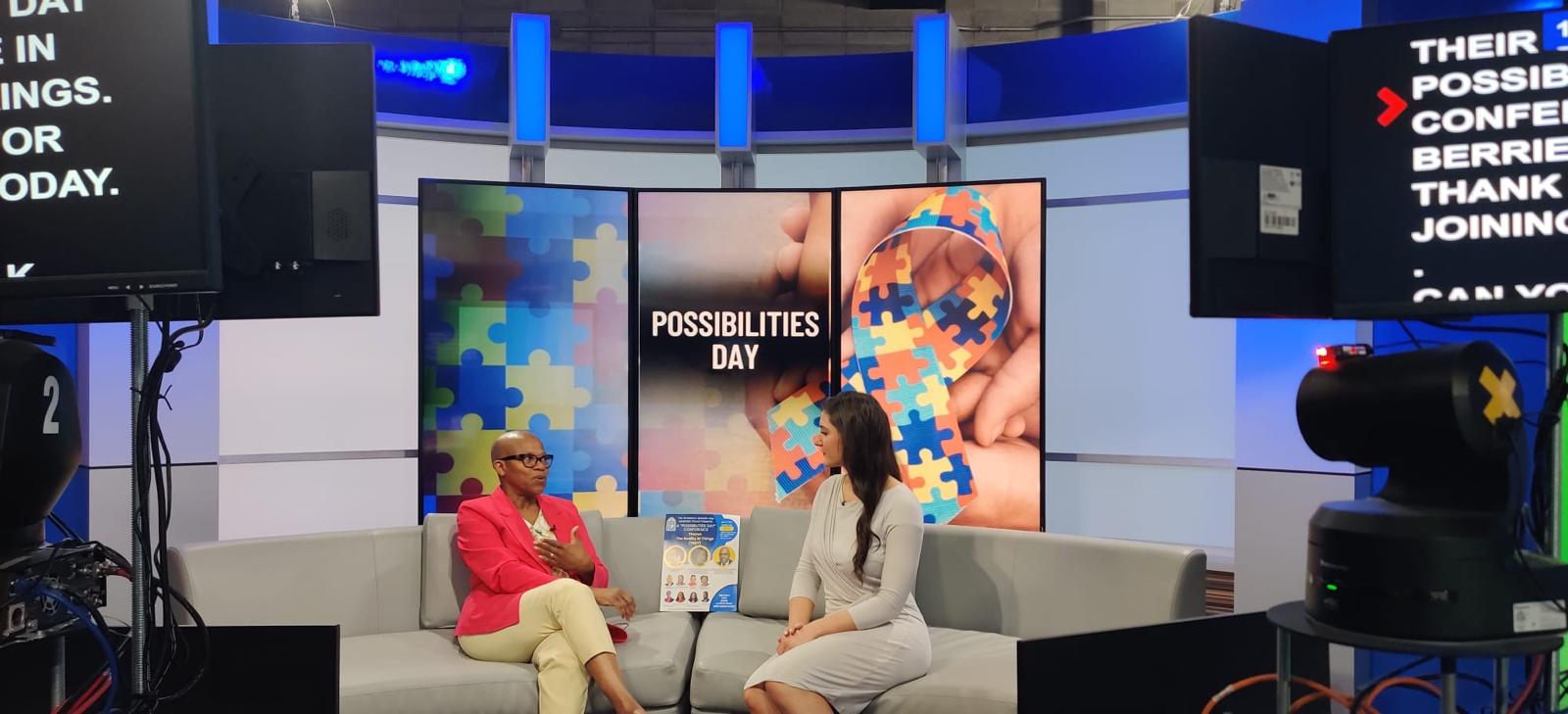
“If someone has a deficiency, you may [be tempted to see] them [as] lesser, but [Jesus] says that [whatever we do] to the least of these, we do to Him (referencing Mathew 25: 39-41).1 So, He identifies with everyone in society. We are all on the spectrum, I think. It is just that some of us have hidden disabilities while others have apparent disabilities.”2
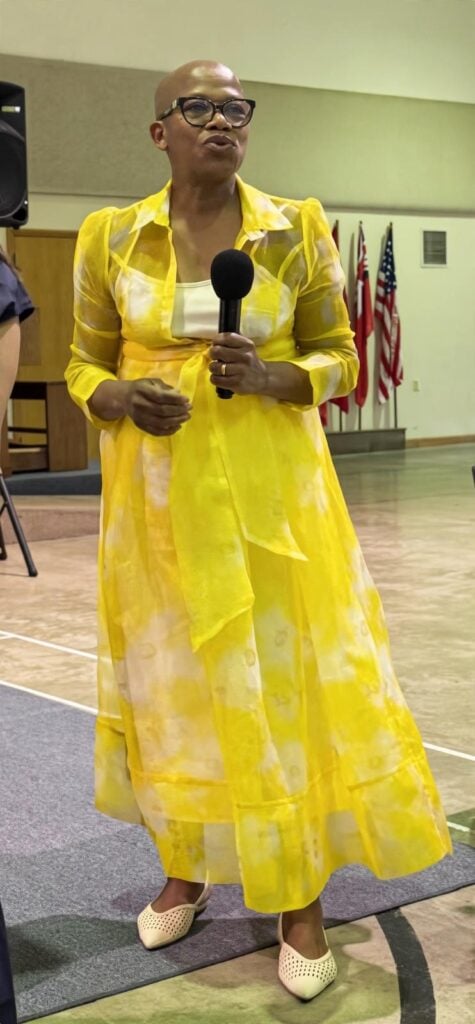
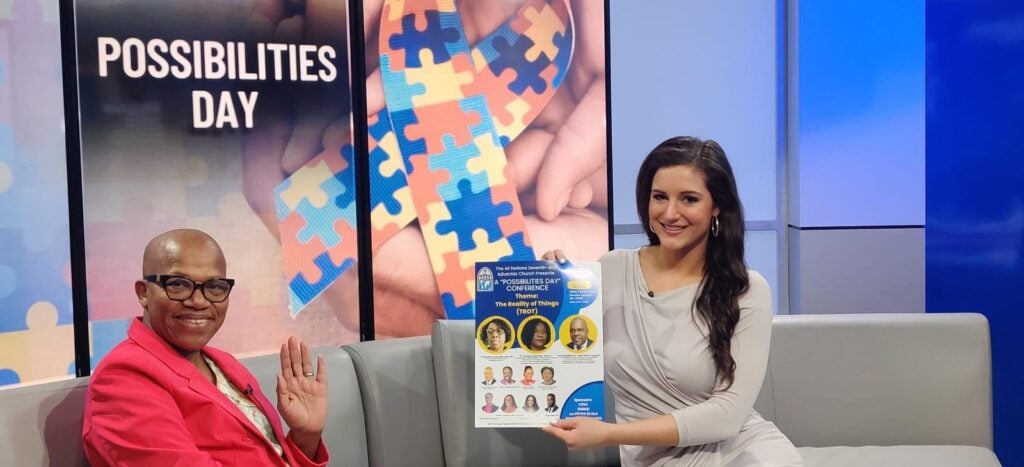
These were some of the sentiments shared by Brigette Hinds, Director of Events at All Nations Seventh-day Adventist Church, at the Possibilities Day: Autism Awareness and Advocacy Conference, and in an in-studio interview with WNDU 16 News Now, a local television network, leading up to the event.
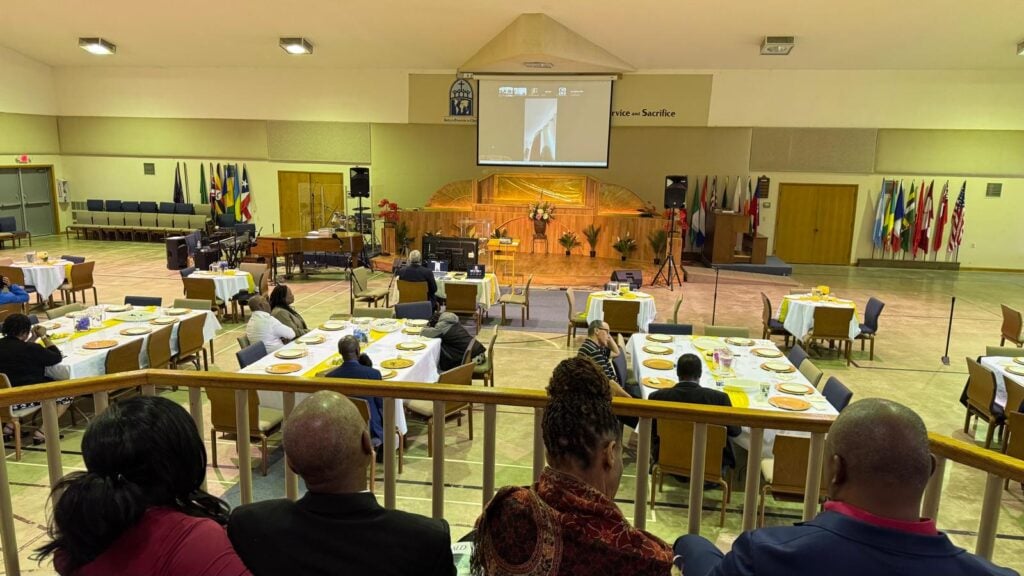
Hosted by All Nations Seventh-day Adventist Church in Berrien Springs, Michigan, United States, the conference was held in recognition of International Autism Awareness Month. While focused on autism, discussions expanded to disability more broadly. The event brought together presenters from the United States and the Caribbean in a hybrid format, with both in-person and virtual participation.
The theme, “The Reality of Things,” centered on equipping families, caregivers, educators, policymakers, and community members with practical tools to support individuals with autism and other disabilities. Topics included disability law, accessibility in building environments, and sensory considerations such as food texture preferences.
In a deliberate shift from a traditional seating format, the conference was designed to be interactive, with participants seated at tables to encourage dialogue as they shared meals and engaged in open, authentic discussion with presenters.
Among the speakers was Senator Floyd Morris of Jamaica, who joined virtually and contributed from the perspective of lived experience as a blind public official.
Care, Sensory Needs, and Learning Environments
Ana Bolanos-Weston, a parent of two children on the autism spectrum, emphasized the importance of safe and nonjudgmental environments.
“‘Sometimes they mature a little later than everyone else does,’” she said, “‘but that doesn’t mean they can’t accomplish things. It’s about being in a safe place where no one is going to shame them for not getting it the first time.’”3
Speakers also addressed sensory sensitivities, including food textures, which can affect daily functioning and are often misconstrued as behavioral issues. What may be perceived as pickiness or defiance in a child is often rooted in neurological differences. Understanding these nuances enables caregivers to better support overall health and development. A food tasting session illustrated how awareness of these needs can improve care and nutrition.
Lived Experience and Accessibility Challenges
For some, the conversation was deeply personal.
Magdana Gedeon, a member and graduate of Andrews University Theological Seminary, shared her hesitation to apply for pastoral positions due to concerns that she did not feel the church would hire her as a blind pastor.
Speaking to an ABC57 News reporter, one of three local networks onsite covering the event, she shared that she became legally blind following surgery. She emphasized that disability conversations must move beyond awareness toward concrete, systemic change within church structures.4
She pointed to several practical barriers in worship settings, including the inability to adjust the Bible text display in the online version of the Adult Sabbath School Quarterly. She also noted that church projector screens can be difficult to read due to small size, the absence of screens positioned for clear visibility for those seated in areas such as balconies or in the back rows, and unclear or low-quality font rendering.
She further shared that she had hoped to pursue doctoral studies but was unable to do so due to limited accessibility infrastructure within Adventist educational institutions for individuals who are blind. Reflecting on this, she noted that a disability should not mark the end of a person’s dream.
Gedeon expressed hope that conversations about inclusivity would extend beyond All Nations Seventh-day Adventist Church to other congregations and hierarchically up through the church organization and leadership, with practical steps taken to ensure that people with various disabilities are able to attend and fully participate in worship and church life.
Concerns were also raised in the area of education. One educator raised concerns about Adventist schools, noting that teachers are sometimes advised to seek resources in public school systems to support students with disabilities. This creates challenges for families who desire a Christian education for their children but feel compelled to enroll them elsewhere due to limited support and resources.
Disability, Ability, and Workplaces
A key takeaway from the conference was that disability does not equate to inability. However, speakers cautioned against oversimplifying disability, noting that different conditions require different types and levels of support. True inclusion, they said, involves recognizing these differences while preserving dignity.
Presenters also highlighted workplace practices that can create barriers, particularly expectations around multitasking and cross-training, which may disadvantage individuals with certain disabilities.
Faith and Inclusion
Martin Hanna, All Nations Seventh-day Adventist Church lead pastor and systematic theology professor at Andrews University, emphasized the integration of faith, reason, and science in understanding human diversity.
“‘Sometimes we tend to think that religion belongs to one world and science to another world, but the reality is that there is only one world,’” he said in an interview with WNDU 16 News Now. “‘It is the world that God has created. He has given us the gifts of science, theology, faith, and reason, and these should work together to help us accomplish the possibilities that God has built into us.’”5
He added that all people are created with varying abilities, reinforcing a message of dignity and inclusion.
Broader Impact and Ongoing Needs
With an estimated 1 in 5 people in the United States identified as neurodivergent,6 and an even higher proportion when other forms of disabilities are considered, initiatives such as Possibilities Day aim to strengthen understanding in families, schools, churches, and workplaces, enhancing the quality of life for people with disabilities while also supporting caregivers.
Hinds emphasized that recognizing both visible and hidden disabilities fosters greater empathy, understanding, and more patient responses in educational, home, and community settings. For example, teachers may become less punitive and more supportive toward students, while spouses have a better understanding of why their partner acts in a certain way and respond with greater patience and care, leading to healthier relationships. This understanding can also strengthen parent-child relationships by improving communication and mutual support within families.
While progress is being made, panelists noted ongoing challenges, including stigma and limited resources in parts of the Caribbean, as well as shortages of trained personnel.
Still, participants emphasized the importance of tailoring support to individual needs, ensuring that advocacy for dignity and equality is matched with practical care and accessibility, including within church settings, where buildings should be made accessible and accommodating to persons with disabilities.
Joseth Howell is a member of the All Nations Church.