
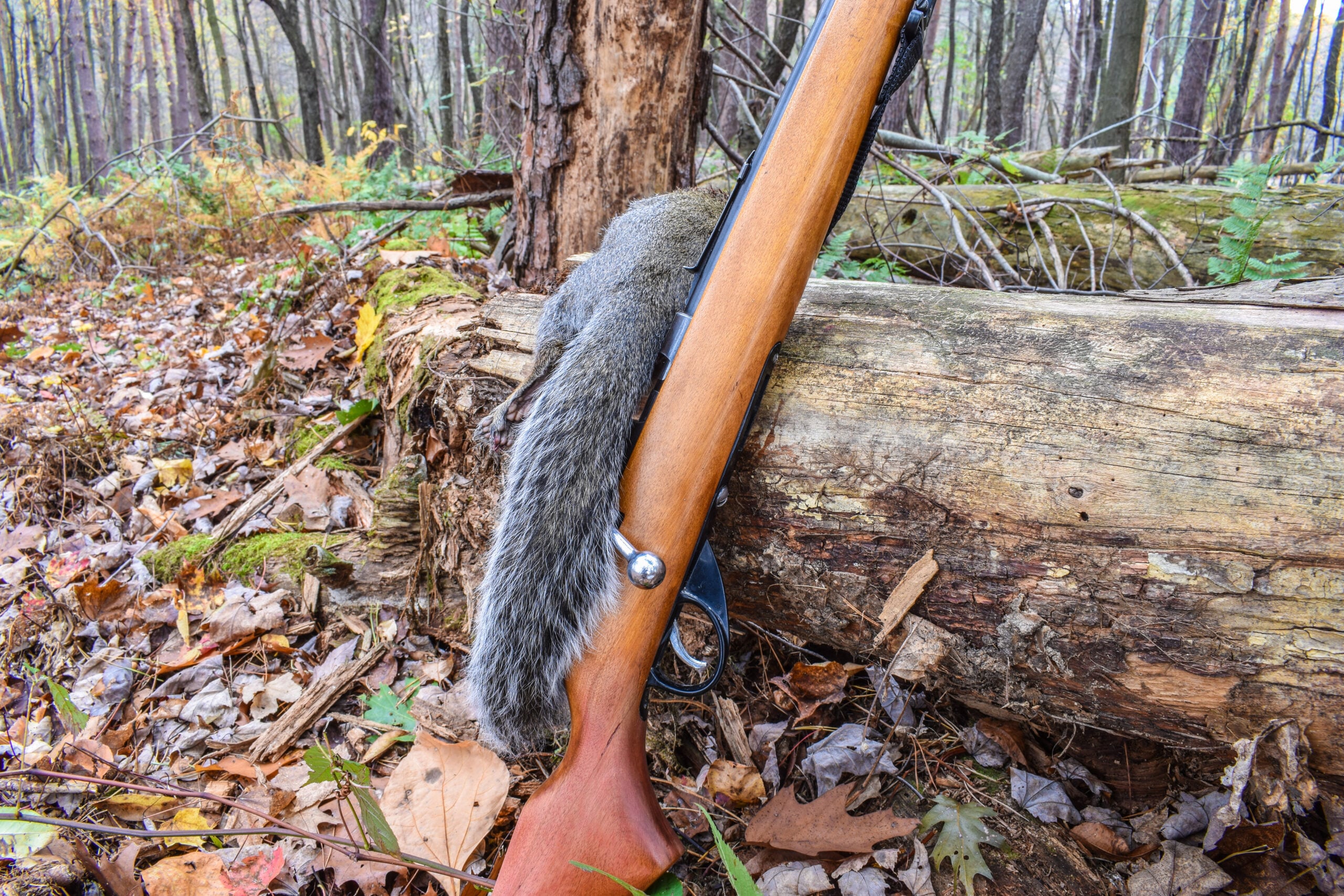
“James White could not have eaten squirrels,” my friend insisted. There must have been a squirrel infestation, he reasoned, and James was simply trying to reduce their numbers. In September 1866, Ellen White had written to their son Edson that “we have killed one wild black squirrel per day,” adding that, “he [James] enjoys it much.”1
I wondered what evidence supported my friend’s claim, and how killing one squirrel per day would have significantly reduced the squirrel population near the hamlet of Olcott, New York. His reasoning was theological and chronological: Ellen White had made this remark more than three years after her “Comprehensive Health Reform Vision” of June 5, 1863, in which she had been shown the benefits of vegetarianism. Moreover, he could not imagine that the Whites would have eaten an unclean animal. My question, however, was different: What evidence is there for the alleged squirrel infestation and James’ supposed effort to help eliminate that “evil?”
In the next sentence, Ellen White stated, “We have all the fruit we could desire.” Her comment about squirrels therefore appears in a context concerned with food. Seven years later, the Whites vacationed in the mountains of Colorado with their other son W.C. White and Charles S. Glover. They met two travelers who “had nothing to eat but squirrels and pork,” and so they shared bread with them. A few days later, “Willie shot two grey squirrels to make broth for Brother Glover.” 2 Both statements identify squirrels as food. Further, the Review and Herald and contemporary cookbooks corroborate the practice of hunting and eating squirrels.3
Finally, the remark must be placed within the development of Adventist understanding and Ellen White’s own experience. Although her 1863 vision emphasized the health benefits of vegetarianism and warned against eating pork,4 it did not address clean and unclean meats. Adventists did not come to a clearer understanding of the continuing relevance of Levitical food laws until the 1880s and 1890s.5 From 1863 to 1893, Ellen White was a habitual vegetarian; she refrained from eating meat, but she also adapted to exceptional circumstances, including travel, illness or lack of suitable food. The squirrel remark belongs to this transitional period. When she became a strict vegetarian in the 1890s, it was primarily for ethical reasons.6
This closer investigation shows that we need not imagine James and Ellen White shooting one cute critter per day for amusement. The evidence points instead to food, circumstance and a developing understanding of health reform.
- Ellen G. White to James Edson White, Sept. 21, 1866, Lt 3, 1866, EGWE.
- Ellen G. White, Diary entries for Sept. 18 and 26, 1873, Ms 11, 1873, EGWE.
- See, f.e., “Knowing the Time,” Review and Herald, Dec. 1, 1874, 179; “The Champlain Valley Book of Recipes” (Plattsburgh, NY: Munro and Warren, 1875), 30; “The Home Cook Book: Tried and True Recipes” (Toledo, OH: T. J. Brown, 1876), iv, 25, 47, 52.
- Ellen G. White, “Spiritual Gifts,” vol. 4a, “Important Facts of Faith: Laws of Health, and Testimonies” Nos. 1–10 (Battle Creek, MI: Steam Press of the Seventh-day Adventist Pub. Assn., 1864), 124, 126, 129–131, 146–148, 153–154.
- Jiří Moskala, “Clean and Unclean (Leviticus 11),” “Encyclopedia of Seventh-day Adventists,” Nov. 27, 2021, accessed March 10, 2026, https://encyclopedia.adventist.org/article?id=GFRG.
- Theodore N. Levterov, “Ellen White and Vegetarianism,” in “Understanding Ellen White: The Life and Work of the Most Influential Voice in Adventist History,” ed. Merlin D. Burt (Nampa, ID: Pacific Press, 2015), 201–05.
Denis Kaiser is an associate professor of church history at the Seventh-day Adventist Theological Seminary at Andrews University.