
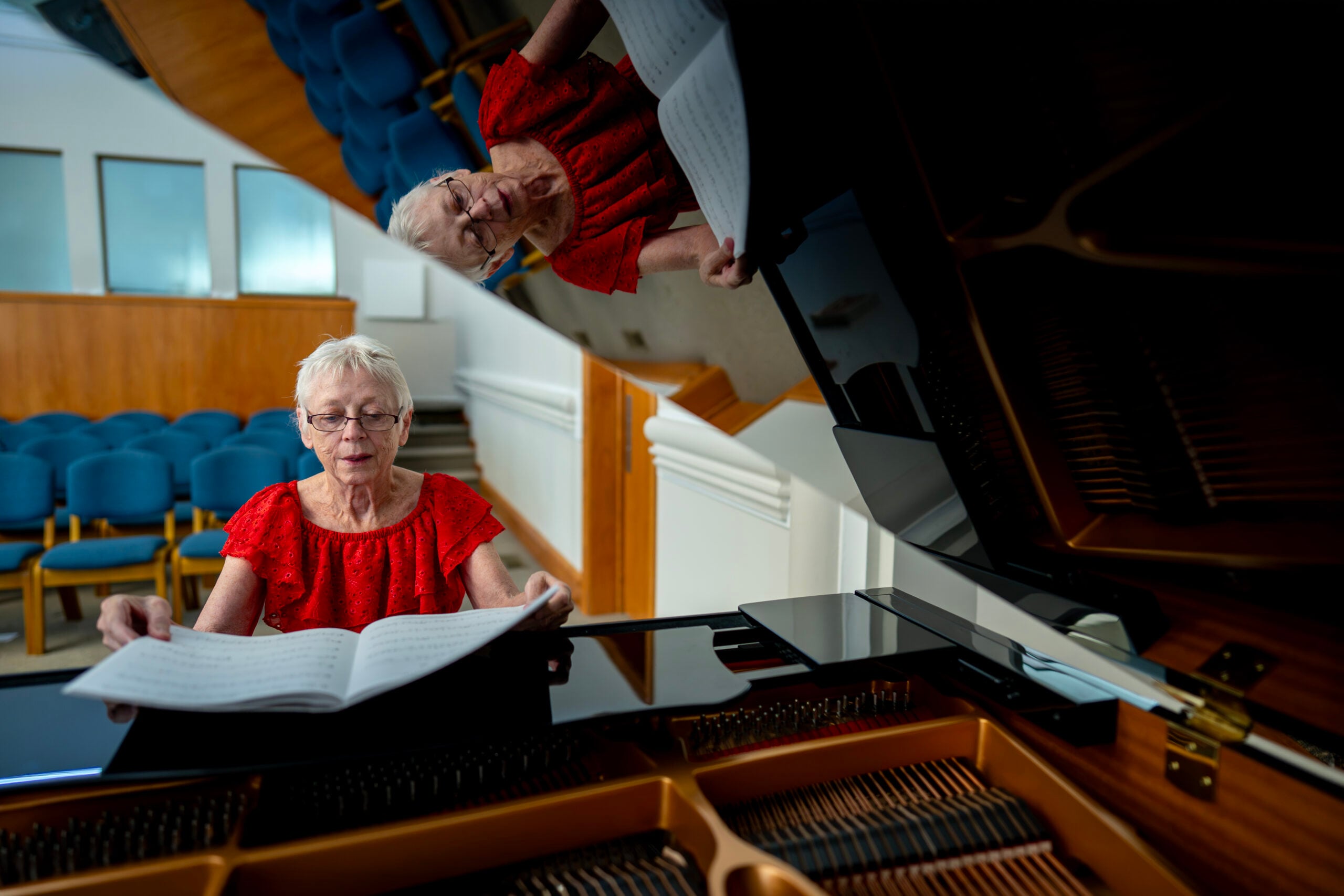
On days when she’s playing piano at the Stevensville Church in Michigan, Karen White likes to arrive before Sabbath School, get everything set up and run through a few bars to reacquaint herself with the touch of the church piano. She has already put little paper clips or bookmark stickers into the hymnal and other music books she brings so that she can easily turn to the right page. Before each service Karen prays that her music will touch someone’s heart and make a difference in their relationship with Jesus. They may be in the valley of decision, she says, and even though she can’t see it happening, she draws strength from knowing the Holy Spirit is working on people’s hearts.
For the 10:45 a.m. service, she begins playing prelude music at 10:40, choosing meditative hymns or praise songs that coordinate with the theme or sermon topic of the day. She considers the message of each song and plays in a style which supports that message. If she’s playing “There Is a Quiet Place,” for instance, she might start with just the melody for a few measures, then bring in some right-hand harmony, then the left hand as the song gradually builds to a climax, and then return to a soft, meditative ending. For hymns with multiple verses, she creates variety in the way she plays each verse, because, she says, “humans lose interest very quickly.”
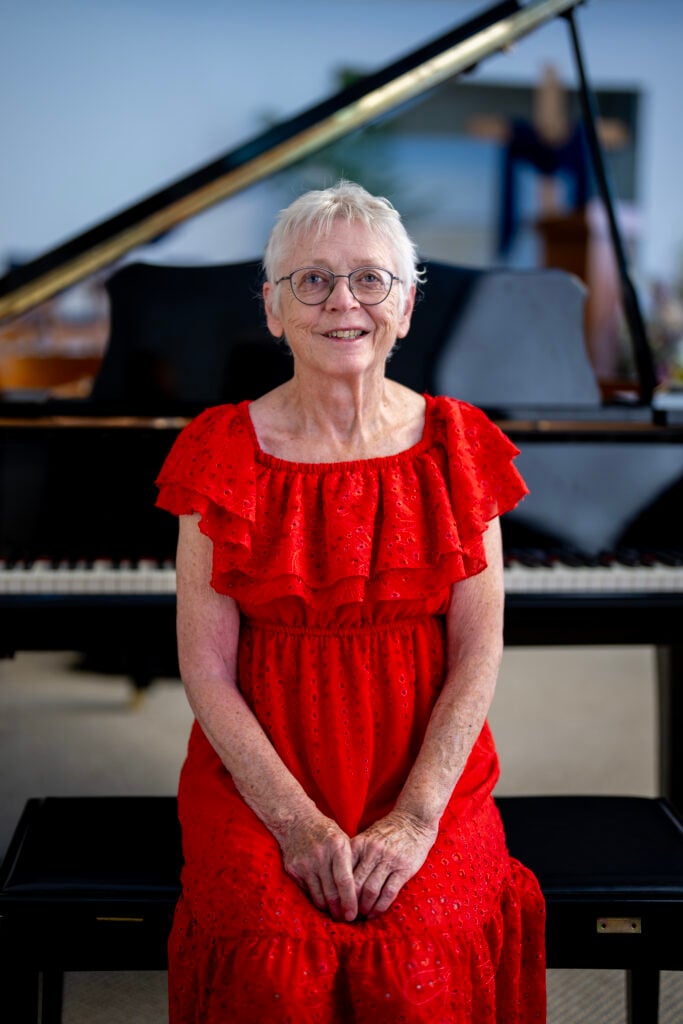
That kind of playing may sound unassuming from the pew, but it is hardly accidental. Behind each hymn, each transitional sound, is a musician thinking carefully about how to support the worship experience week after week.
It takes a lot to be a capable church pianist. Every church needs at least one such person, and a few congregations are blessed to have several, faithfully present, usually in the background. They may not give sermons in words, but they contribute much to the spiritual tone of the service.
According to Johann Sebastian Bach, in a note he wrote on the margin of his Bible next to II Chronicles 5:13: “Where there is devotional music, God is always at hand with His gracious presence.” In many congregations, it is the church pianist who helps create space for that sacred atmosphere. The church pianist is typically the pillar of the church’s worship music: the prelude, the postlude, the children’s story music, the congregational prayer prelude, vocal accompanist; you name it. We’d like to introduce you to some of these dedicated Lake Union musicians.
Preparation for Service
Playing for a church service can be a demanding job, so it’s no surprise that becoming a church pianist doesn’t happen overnight. It helps if you start early.
Karen began life in the early 1950s, and taking music lessons was expected in her community. She started at age 6, practicing 30 minutes a day, and very shortly began following her half hour of required practice with another 30 or 40 minutes of playing just for enjoyment. By the time she was 10, she accompanied her father singing at Carolina Camp Meeting. After the meeting, one man asked her father who accompanied him — from the congregation he couldn’t see anyone at the piano. Karen is not tall. By the time she reached high school, she was taking lessons in piano, organ and clarinet, and she has spent a lifetime making music.
Susie DeHart, who plays at Carmel Church in the Indiana Conference, can’t remember a time before she started playing piano. Once, when she was about 12 years old, she was visiting her grandparents’ farm in Wisconsin and played at the local church Sabbath School. Someone called “number 4” in the old “Singing Youth” songbook, “The Captain Calls for You,” wondering if this lively arrangement might be too challenging for the young pianist, but Susie had it securely in her repertoire and was ready when called.
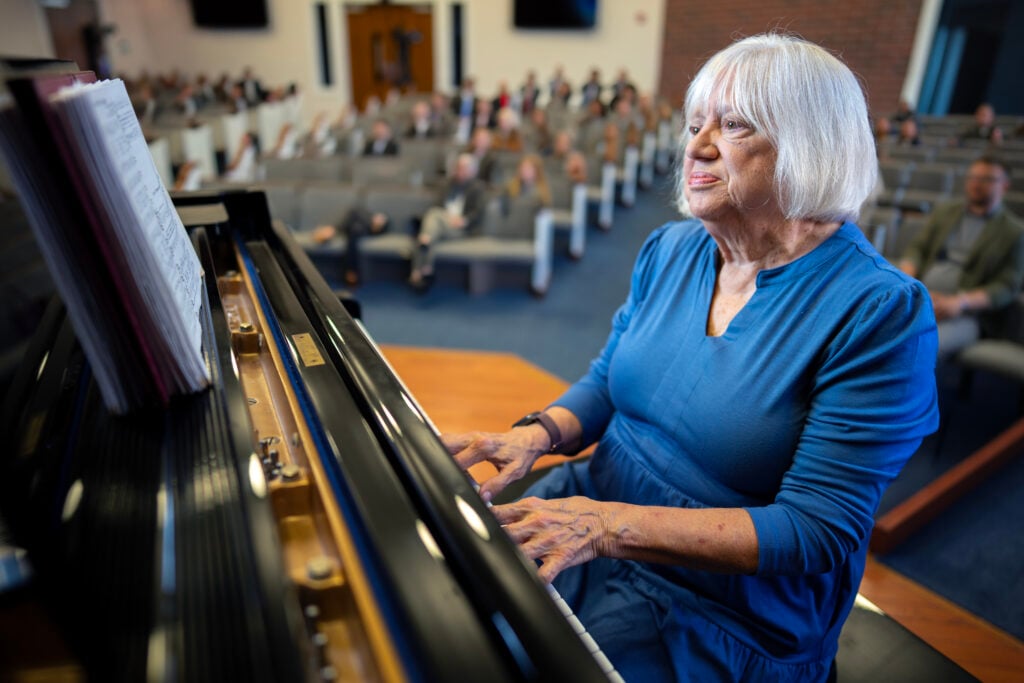
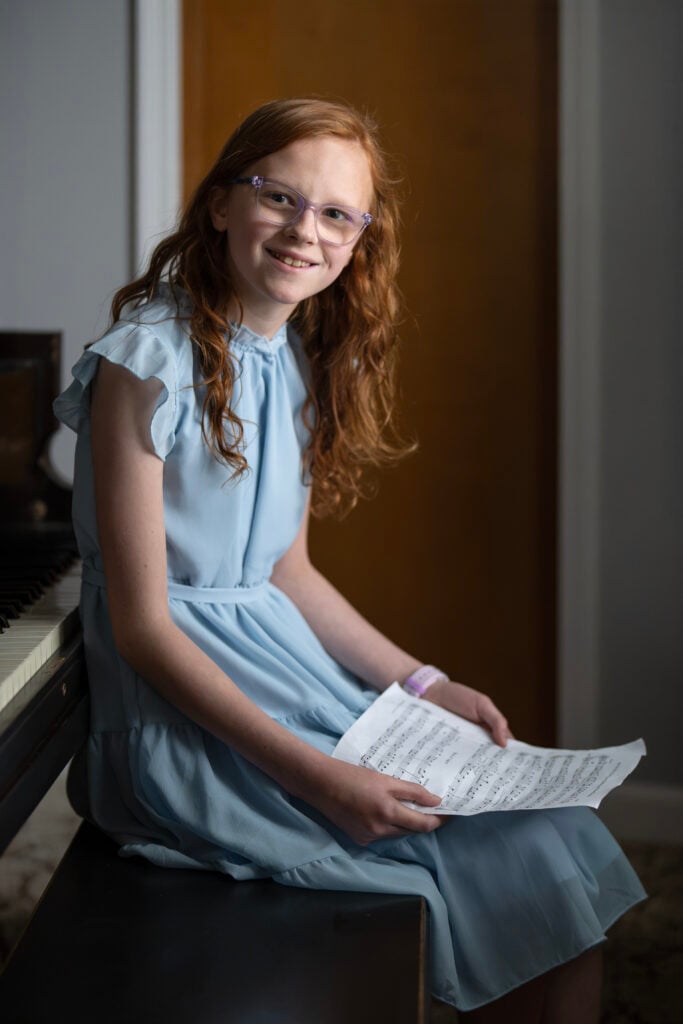
For another young pianist, the first lessons came through family and technology. Lily Reitman, from the Michigan Conference, began piano lessons with her grandma over FaceTime when she turned 6 and immediately enjoyed it. From day one, recounts her mother, she would sing along as she played her simple songs. When she got good enough, she started to practice hymns for her lessons. Now 12, she plays nearly every week for her father Charles Reitman’s district of churches in Northeastern Michigan.
Family influence also drew Lucinda Croft toward music. At Milwaukee Northwest Church in the Wisconsin Conference, Lucinda became interested in the piano when she was 9 or 10 years old, just entering the fourth grade. Her mother played, and it naturally intrigued her to learn. Observing Lucinda tinkering on their home piano, her father began looking for a teacher. He found a newspaper ad for a local college student teaching half-hour lessons for $1.25 and started driving Lucinda on the back of his motorcycle into town for weekly lessons.
For Myrna Hunt, of Niles Philadelphia Church in the Lake Region Conference, a teacher’s influence helped turn ability into consecrated service. Myrna says that her mother discovered she had a good ear and started her piano lessons at age 8. After eighth grade, she began taking lessons from Esma Ruth Williams at the Northern Indiana Conservatory in South Bend, Indiana. Williams really inspired her students, and Myrna learned to put a touch on the piano just like her teacher. It was her influence on the piano, Myrna says, that convinced her to give her talent to the cause of God.
Not everyone was so fortunate to receive lessons. Elizabeth Joy Buikema, who plays for the Sauk Valley and Savanna Churches in the Illinois Conference, grew up in a Seventh-day Adventist-owned floating log camp in Southeastern Alaska in the 1960s. She dreamed of playing hymns of praise on the piano but, as the eldest of six children, she realized there was never enough money for formal lessons. Undaunted, she made her little church her classroom and sat at the piano with the 1941 hymnal, slowly teaching herself to read music, “agonizing over the notes, measure by measure, hymn by hymn.”
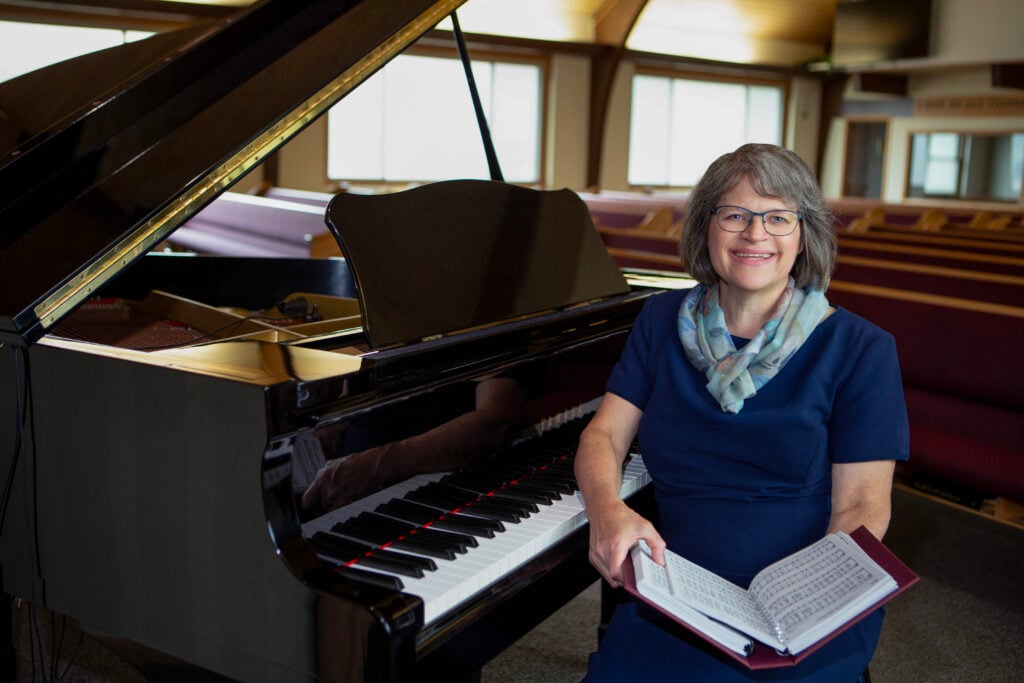
The beginning was rough for Jacob Martin, who plays at The Shepherd’s House Church in the Wisconsin Conference. He remembers playing “Lift Up the Trumpet” in the wrong key and barely making it through all the verses with tears in his eyes. Fortunately, Jacob had the opportunity for 14 years of classical training, from age 7 until he graduated from college, and further honed his skills by watching pianists at big events, like GYC, where he would listen to how the pianists played and embellished their pieces. Then he would practice their styles until he could do it himself.
Though Stephanie Kasner always loved to play any keyboard or piano, the Wisconsin Rapids Church pianist really suffered stage fright. One Sabbath the regular pianist at her church was unable to attend and the silence of the service weighed on her until she couldn’t stand it any longer. When the offertory time came, she “snuck up to the piano and nervously played ‘As the Deer.’” The congregation was very grateful, and Stephanie was glad she was able to help. She began filling in at the piano when needed, but because at that time her repertoire of playable hymns was small, she would always request “Draw Me Nearer” for the opening hymn.
Playing From Prelude to Postlude
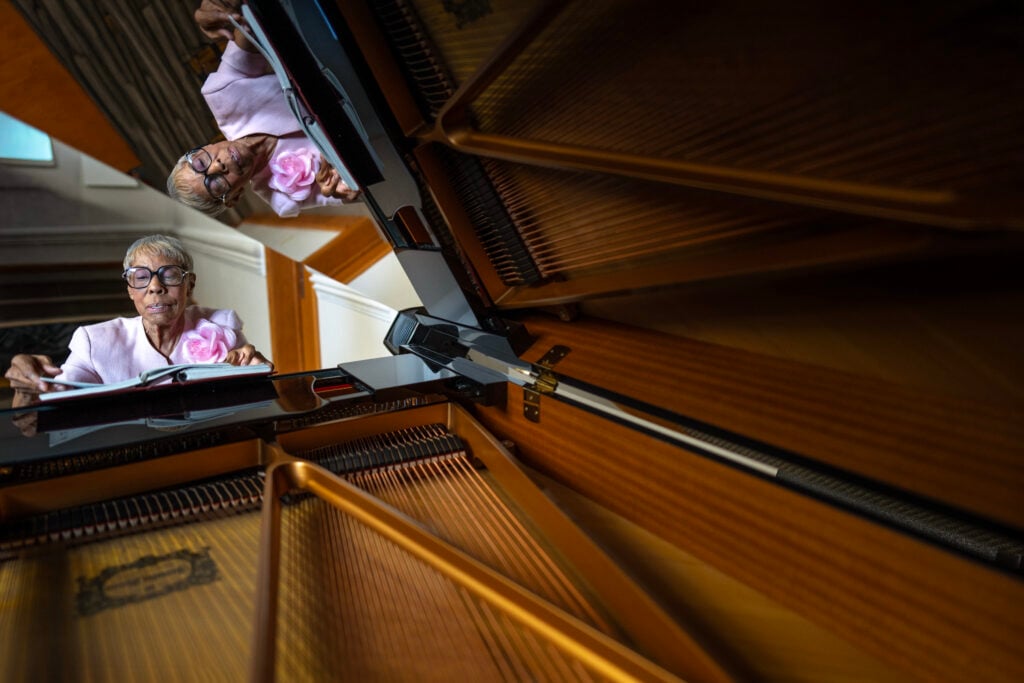
As Karen sits down at the piano to begin her prelude music, a hum of conversation is going in the background. She begins playing, and the hum continues right along, until the platform participants take their place. For many people, the piano is background music, something to talk over until the “real service” gets underway, and it’s certainly appropriate to greet adjacent church members and welcome visitors, but there’s also a great blessing in listening to the meditative melodies and having a quieter transition to the worship service.
As the children walk to the front for the children’s story, Karen plays variations on “Jesus Loves Me,” different rhythms, different octaves, alternate harmonizations, left hand walkups, running arpeggios. She knows this old chestnut so well she can do pretty much anything she wants with it.
The opening hymn is “Redeemed,” but with six guitars and a visiting choir plus the congregation, I can barely hear the piano, even though I’m only 20 feet away.
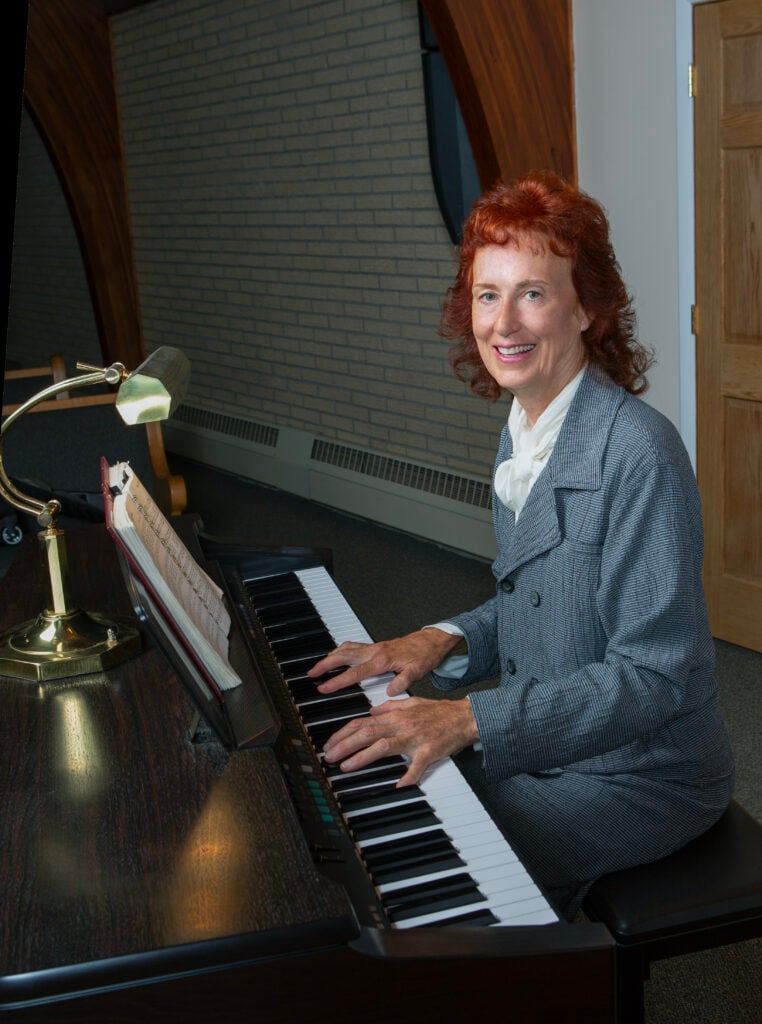
Later, I ask Karen what a pianist can do when the congregation is singing a joyful song too slowly. She says she can encourage a “somewhat” faster tempo by her playing — unless there’s a chorister, at which point she just follows the chorister. With a twinkle in her eye, she notes that James White reportedly came down the center aisle of the church beating his hymn book vigorously against his leg to get the congregation singing up to speed.
Regarding getting through mistakes, Karen used to tell her piano students that it’s not the mistake that’s the problem; it’s what you do after the mistake. “If you just keep going,” she says, “almost no one in the congregation will know it.” However, she adds, “If I make a big mistake, I might make another one on purpose, and then people will say, ‘Oh, that’s just Karen improvising.’” In 1976 Karen attended one of the last concerts given by world-renowned pianist Arthur Rubenstein, then 89 years old. She said he made plenty of mistakes but played with such passion and conviction that she was incredibly moved. As a self-described perfectionist, Karen has learned to let go of mistakes at the church piano — which went hand in hand with more of a focus on self, “how am I doing?” — and focus instead on praising God in union with the congregation.
The visiting choir is handling the special music, so Karen can enjoy just listening and relaxing.
Now it’s time for the postlude. But we’ll get to that by and by.
Purpose In Every Note
Having learned to play “church piano,” what do our pianists enjoy about playing, and what purpose do they find in their role?
For Lily, the joy is simple and immediate. “I love making people smile with real music,” she says, “because it isn’t the same when singing to a CD, which the congregations would have to do if I did not play.”
Whereas for Elizabeth Joy, the purpose reaches heavenward. She imagines herself and the congregation “gathered around the throne of God, lifting our voices together. That vision keeps my heart steady and my purpose clear.” She says “music finds its true meaning only when it honors our Heavenly Father and His Son, Jesus Christ. Without that purpose, it loses its heart. But when it is offered to Him, it becomes worship — an expression of love, gratitude and reverence.”
That sense of music as testimony is something Myrna understands deeply. “Music is my passion,” she says. “I may not be able to preach sermons, but I can testify to what I feel on the piano and organ.”
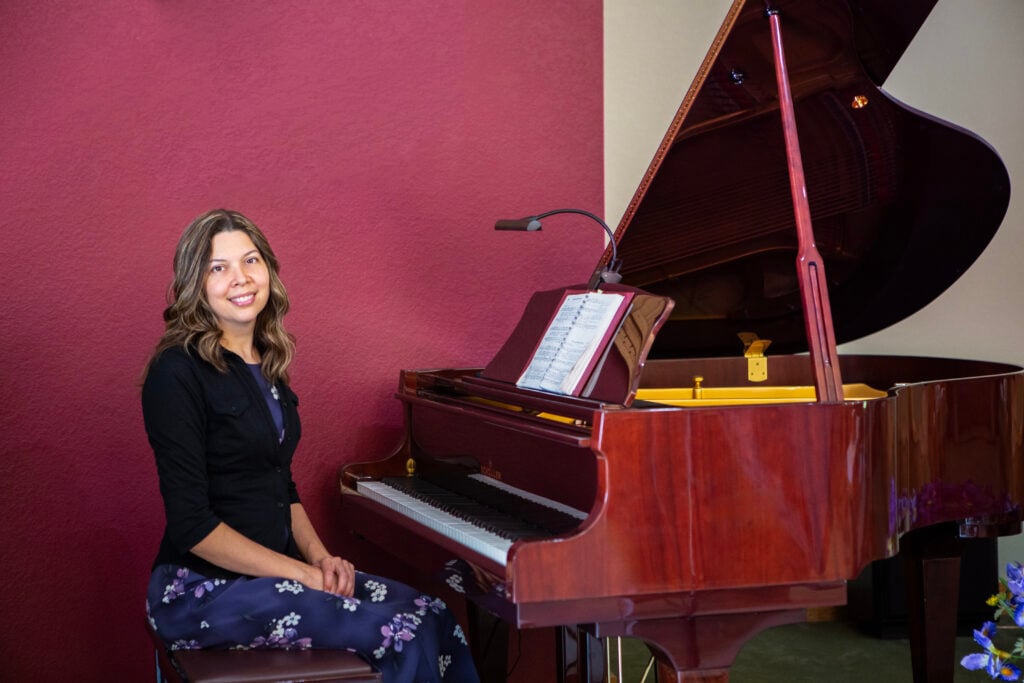
Stephanie sees music as more than an accompaniment. After citing Paul and Silas singing in jail (Acts 16) and Jehosophat’s army going out with the choir “on the front lines, praising God” (II Chronicles 20), she says “Sacred music invites God’s power in an awesome way. It vanquishes the enemy, prepares hearts, and deepens convictions of the Holy Spirit.” As for her personal experience, she says “while public speaking is not my forte, I can offer my tribute of praise through music. Music is a passion I cannot keep to myself. I know God put this passion into my heart for a reason, and it is my joy to use it to glorify Him in any way or time I can.”
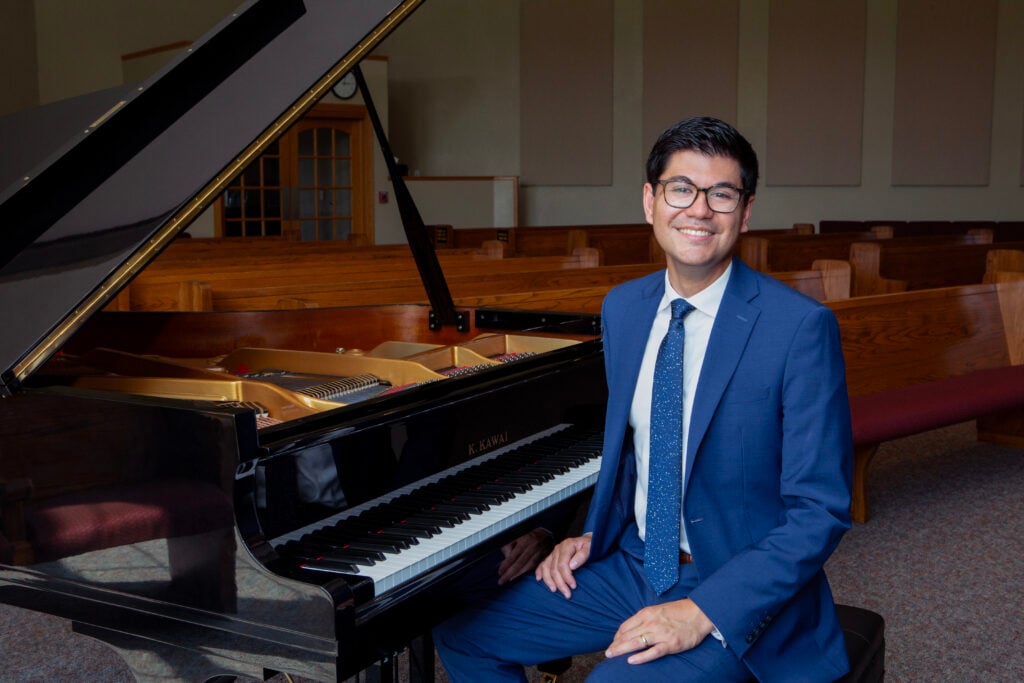
For Jacob Martin, music is both a gift and a universal language. “I have been a church pianist in Alabama, Tennessee, Georgia, Wisconsin and even Seoul, South Korea. Regardless of the language spoken, if I have a piano, I can instantly connect with people in the congregation through the language of music. Music is universal and I love being a part of any worship service through music.”
Looking back on her decades of church piano playing, Lucinda sees this skill not only as a gift but a lifelong ministry. “Playing piano has been my pleasure, joy, comfort, expression and outlet. Hands down, learning this skill was the best gift I ever received from my parents. They would remind me that I would always have something valuable to offer the church.” She adds, “I would highly recommend piano lessons to any interested young person. God can and will use you as He has me. Just be willing and humble and persevere to success. Always exalt Him.”
For postludes, Karen enjoys several arrangers, including Dale Wood, Gloria Roe and Mark Hayes. She finds some of Mark Hayes’ arrangements very moving, including “All Hail King Jesus with Majesty,” which she says sounds very grand but is not that difficult to play.
Today, Karen is playing a version of Dino Kartsonakis’ arrangement, “Miracle of Grace: In Christ Alone.” I tremble when I see runs of sixteenth notes with “11” or “14” written under them, but Karen says she makes it “easy” by dividing the notes between two hands. It does sound beautiful.
After holding the final chord and listening as the sound dies away, Karen puts her music books into her floral print tote bag, her contribution complete for another week.
Scott Moncrieff is an emeritus professor of English from Andrews University. One of his favorite parts of church, as you may have guessed, is listening attentively to the wonderful church pianists at Stevensville Seventh-day Adventist Church, his home church.