
It took a group to hold the ropes — a collective that saw the crowds and decided to climb the roof to lower the paralytic man to Jesus’ feet. At the height of Christ’s ministry, when crowds gathered to hear Him speak, four men brought a paralytic to Jesus using an innovative method. That same spirit of purpose shapes AdventHealth’s Mission Integration Pillars, which helps every team member support people in ways that are compassionate, faithful and practical.
At AdventHealth, mission is not an added layer. It is the way they lead, work, care and serve. The five pillars — Missional Leadership, Wholehearted Teams, Whole-Person Care, Serving Communities, Healing Environments — help connect daily work to a shared purpose: helping people feel whole in body, mind and spirit.
“When you talk about mission, it can become ambiguous very quickly,” said Tim Cook, senior vice president and chief mission integration officer at AdventHealth. “For AdventHealth, mission isn’t just one element or a bolt onto the organization. We see patients the way Jesus saw patients. That’s the differentiator. The pillars aren’t isolated, they’re a step to the next pillar. It’s a domino effect.”
The result is a collection of team members who feel a sense of ownership and purpose within the organization, no matter their role, leading to better, more wholistic patient care.
Missional Leadership
Connects people to purpose and models values-centered behavior.
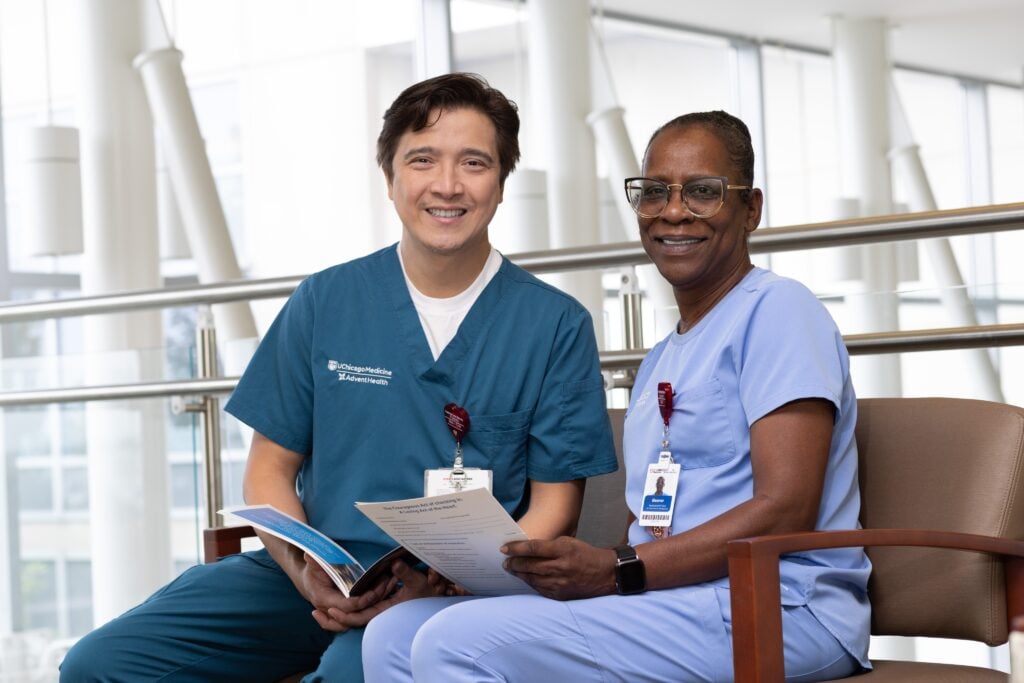
“The Missional Leadership pillar paints a very clear picture of what leadership is at AdventHealth,” shared Garrett Caldwell, vice president of mission integration at AdventHealth. “It would be very easy in a large organization like AdventHealth to see leadership as a ladder to climb or power to obtain, but this is the opposite of how Christ modeled leadership.”
According to Caldwell, Micah 6:8: “To act justly and to love mercy and to walk humbly with your God” (NIV) is the Scripture that drives leadership development at AdventHealth. Fulfilling this purpose requires taking responsibility for the sake of someone else.
In the Bible story of the paralytic man who was lowered through the roof of a home to be healed by Jesus, the men took responsibility for the paralytic’s healing. They put themselves aside because there was someone in need and they had the ability to help.
Heather Hoffman, director of spiritual integration at UChicago Medicine AdventHealth, shared how she has seen senior leaders challenge team members. “At a recent biannual leadership retreat, Dr. Monica Reed [president and CEO of UChicago Medicine AdventHealth] challenged her team to reflect on their ‘why.’ Amid the updates and data points shared during the session, a large portion of the time was spent intentionally connecting with colleagues,” said Hoffman. “We learned and reflected on how our individual stories influence our calling and explored ways to harness our God-given gifts in our leadership journey.”
Wholehearted Teams
Experience a deep sense of calling in their ordinary work and sustain a culture focused on mission.
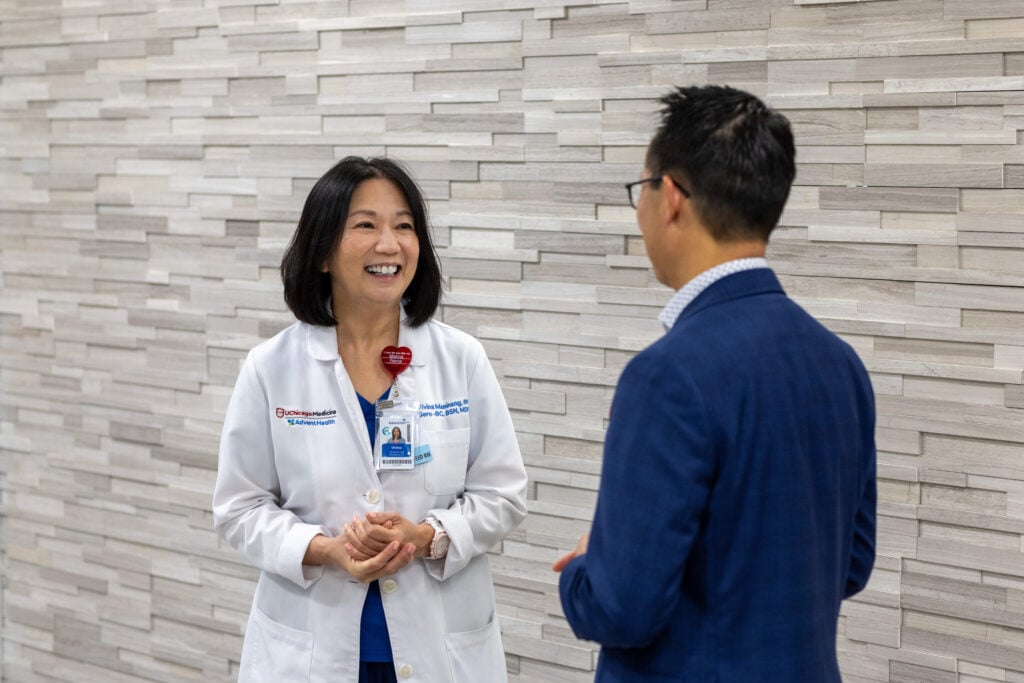
It’s unknown whether the men who lowered the paralytic man through the roof were Jews or Gentiles, but they had a singular objective: working together to lower their friend toward the source of his healing. The Mission Integration Pillars redirect to a central mission and with over 57 hospitals and more than 107,000 team members, teamwork is necessary. Maintaining an entire healthcare organization cannot be a solitary pursuit. A leader can take action and assume responsibility, but doing so requires a network of intentional people.
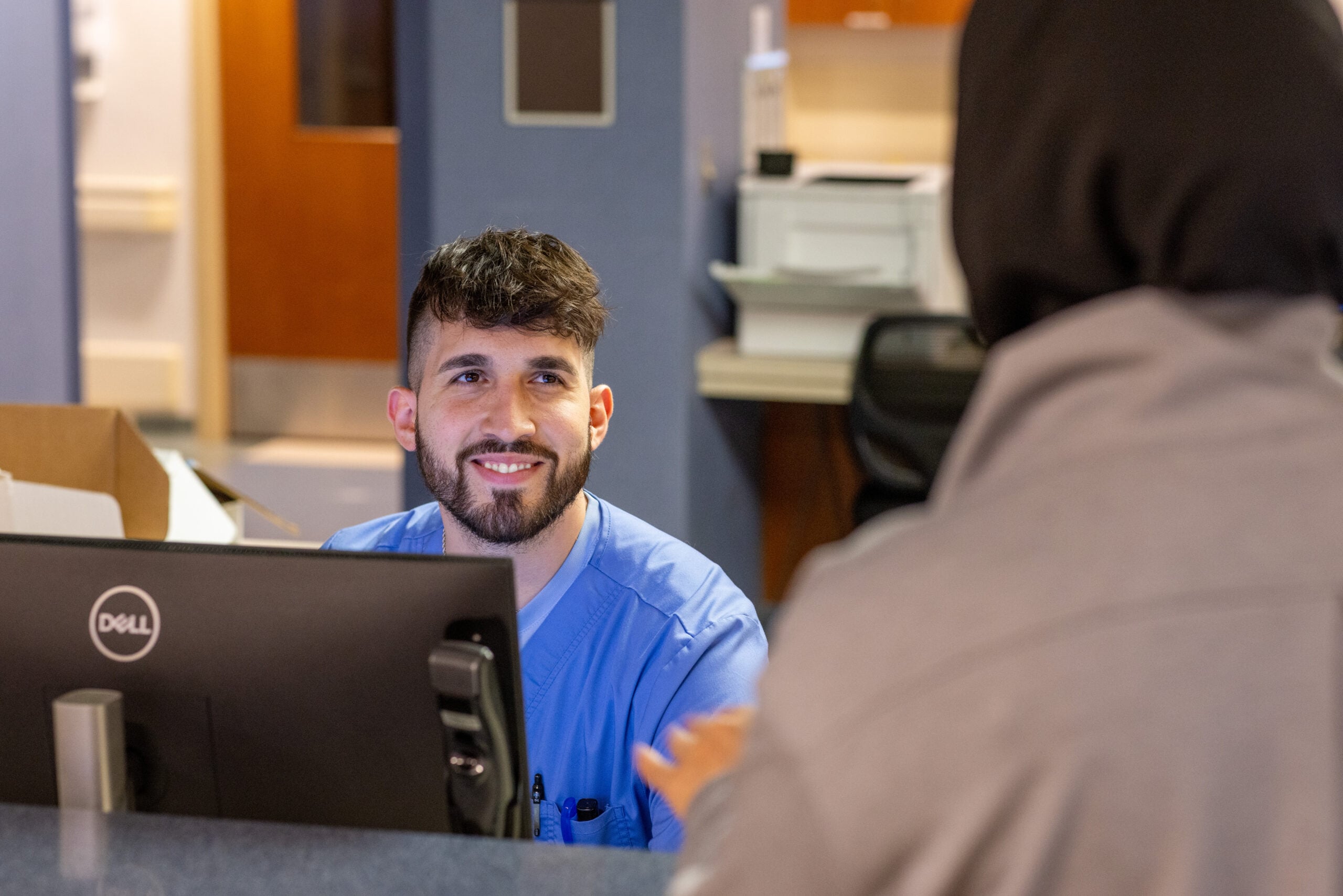
At AdventHealth, one patient’s care plan is the result of the efforts from over a dozen individuals. The front desk receptionist ushers them in from the waiting room, a space curated by designers who selected artwork, furniture and colors to help regulate and welcome patients. Nurses, interns, tech specialists, lab attendants, pharmacists, social workers and doctors lead the day-to-day patient care and interactions. Environmental services team members keep the rooms neat and sterilized to hospital standards. Food services organize meals according to patients’ dietary needs. Each moving part must work in tandem, bringing their expertise to create the best care plan for each patient.
“The AdventHealth brand promise, ‘feel whole,’ is delivered through excellent whole-person care,” Cook shared. “That care is delivered through people who see their work as more than a job. They see it as a sacred calling and understand deep in their hearts that what they do is healing ministry. At AdventHealth, we call those people a wholehearted team and we are grateful for each one of them!”
UChicago Medicine AdventHealth hosts Whole-Person Care Conferences for team members at their Hinsdale location. The panel lecture series is all-inclusive, from housekeeping to the executive team and clinical professionals, exploring the social and emotional aspects of whole-person care. Attendees receive continuing education credits for attending and/or participating in the events. Each role will demand its own “what,” but every team member can pursue the same “why.”
Whole-Person Care
Achieves clinical excellence through integrated healing for body, mind and spirit.
People are more than just a body. There is a necessary partnership between faith and modern medicine. Applying clinical insights can provide more nuanced and wholistic care that gets to the root of a problem, offering longer, more sustainable healing.
Identifying underlying sources of stress, unmet needs and environmental factors allows healthcare providers to get the whole picture. Through AdventHealth’s whole-person care approach, patients are assessed for physical, mental and spiritual care.
“Whole-person care begins with the understanding that health is interconnected,” said Cook. “At its core, whole-person care is a commitment to treat body, mind and spirit as dimensions of one human life. Healing is not only physical. Emotional and spiritual needs influence how a person processes information, makes decisions and moves toward recovery. AdventHealth’s commitment to whole-person care recognizes each patient’s whole health and humanity, not just their malady.
Healing Environments
Spaces designed to foster dignity, peace and restoration while advancing environmental stewardship.
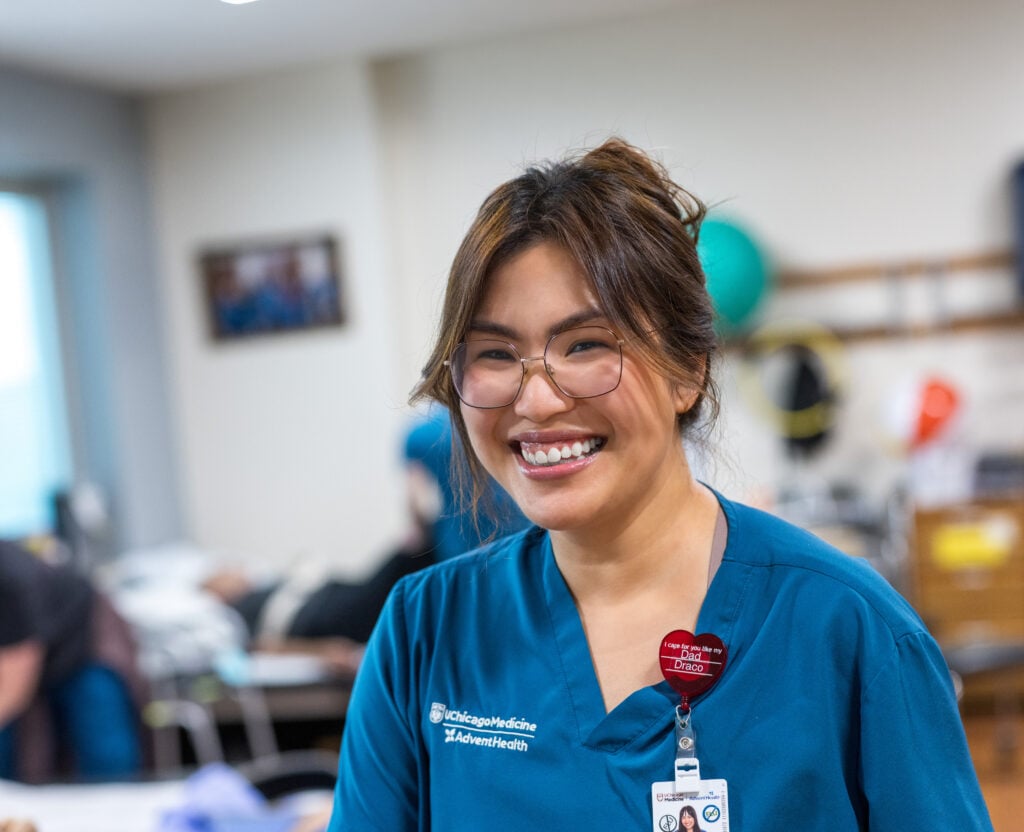
When caring for patients, every action, every choice, is meant to bring the patient closer to feeling whole. Whether a healthcare worker, administration, a family member, or a patient, treating others with peace and dignity creates restoration.
The artwork displayed in each facility is curated to foster calm through natural elements and tones. Serenity spaces are available in multiple clinics within AdventHealth, designed for team members to decompress and relax after stressful cases or to take a break for private reflection and prayer. The benefits of quality treatment and gracious care are a way to pay it forward, encouraging a constant cycle of care. One example of this is when a musician offered to play piano once a week in the lobby at UChicago Medicine AdventHealth La Grange to honor the team members who cared for his loved one.
“A healing environment begins with the team members. When people feel acknowledged, they maintain the space,” said David Oceguera, vice president for mission and ministry at UChicago Medicine AdventHealth.
For patients, this means being present in their lives as a healed individual feeling the impact of an entire healthcare system treating them with dignity. For AdventHealth team members, it means feeling empowered to continue active stewardship, recognizing their role contributes to a purpose greater than themselves. There is a difference in the atmosphere when spaces foster a peaceful environment made by respected individuals.
Serving Communities
Leveraging partnerships to address documented needs, advancing health and well-being beyond our walls.
The paralytic man was one of the few who were brought to Jesus by a loving collective of people. It was a community that worked together to address the need of a community member who might otherwise not have access to care.
What happens when healing a patient requires addressing a non-medical need? What if a healthcare or social worker recognizes a patient’s physical ailment is the result of food insecurity, domestic violence or poverty? With the whole-person care approach, AdventHealth goes beyond identifying the need and helps patients close the gap to get closer to feeling whole through practical solutions.
“Beyond direct service and community outreach, AdventHealth leaders actively engage in the communities we serve through board service and civic leadership,” said Fabiola Zavala, director of community advocacy at UChicago Medicine AdventHealth. “Across our local service area, our leaders serve on 25 community-based boards and advisory councils whose missions align with identified Community Health Needs Assessment (CHNA) priorities. These relationships strengthen collaboration, deepen our understanding of emerging community needs and create opportunities to collectively advance health equity, improve access to care and address the social determinants that influence health outcomes.”
The Legacy of the Mission Integration Pillars
The Mission Integration Pillars do not exist in isolation but as a cohesive structure, with one leading to the other in an organic foundation upon which AdventHealth centers itself.
“The five pillars are a way to hold ourselves accountable, understanding the comprehensive work done in each area. Every role at AdventHealth is touched and shaped by the pillars,” shared Caldwell.
Empowering leadership through purpose inspires mission-focused teamwork that cares for the body, mind and spirit, fostering partnerships that benefit the community and create a healing environment. They serve as an entry point for every member of the organization, anchoring themselves in a mission that serves others.
In the Bible story of the paralytic man, the men who gathered did more than climb a roof, make an opening or hold the ropes. The paralytic man was more than a patient and the Person to whom he was lowered was more than a man. The friends were leaders who used teamwork to aid a member of their community. The paralytic man was a complex person with both physical and spiritual needs. The Man was their Savior and the Ultimate Healer.
AdventHealth strives to be more than a healthcare system, but a center for deeper healing where every patient and team member can take part in a greater mission.
“The foundation of our mission, Extending the Healing Ministry of Christ, is intentionally inclusive,” said Cook. “What we are trying to do is build mission integration into the way we do what we do. We see a call to redeem and restore broken people just as Jesus did.”
Nicole Dominguez is a writer for AdventHealth.