
Education professionals are identifying the virtues of figuratively breaking down their classroom walls and more actively incorporating the great outdoors into the curriculum. In several Seventh-day Adventist schools and institutions throughout the Lake Union, spending time with God’s second book is not a sprinkled-in novelty or a brief respite from the learning experience; it is an indispensable thread woven through it.
Additionally, parents are understandably voicing their deep concerns for their children’s overexposure to screens and electronic devices, and this may be an underpinning of the entire topic at hand. Technological advancements have taken the facets of life, education and otherwise, many steps forward but perhaps also many steps backward.
It has reached a point where teachers, parents and students recognize the advantages of reinstituting more “primitive” practices.
Illinois
Yanina Jimenez, principal of the Downers Grove Adventist School in suburban Chicago, was especially enthusiastic about discussing their outdoor classroom.
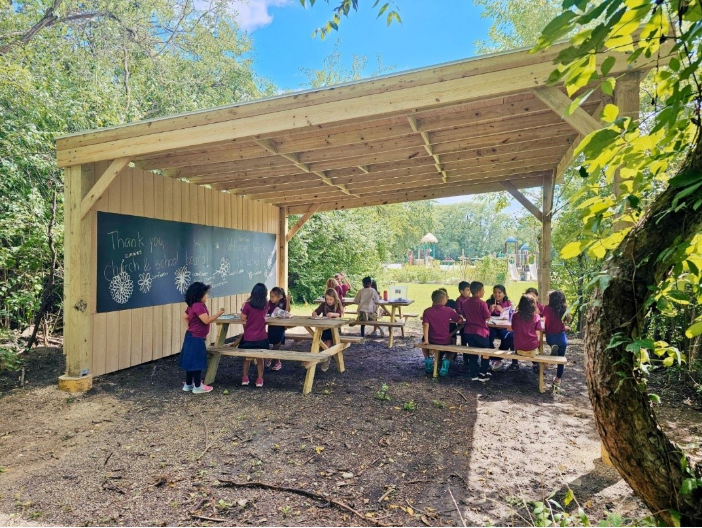
“Our students look forward to their time [outside],” said Jimenez. “Whether they are reading, studying science, the Bible, social studies … learning feels different.” She added how the students’ observational capacities have become keener. “They are no longer learning about nature; they are immersed in it.”
A team of skilled handypeople constructed a wooden cantilever pavilion, with its one wall plastered with a blackboard. It provides delightfully scenic views and adequate protection simultaneously.
Jimenez summarized a typical day. “Our students get out of their classrooms, through the playground, and then to the outdoor classroom,” she said. “The materials they use to understand concepts, ideas, and skills are from nature, such as little sticks, rocks and leaves.” The students have reasonable leeway to sit on the benches or ground, move around and talk with each other, she added. When they return to their regular classrooms, they do so with quite an energy boost.
The impact this custom has on the children is palpable. “I have noticed a clear difference,” Jimenez said. “Our students seem happier when they are in that outdoor classroom, more engaged and more curious…. Parents have also shared how much they appreciate this.” She also addressed the students’ heightened environmental stewardship. “Surprisingly, they have lovingly adopted this classroom as their very own space. They take care of it.”
Michigan
“Our children are outside for at least two hours every day whenever weather safely allows,” said Kristy Conklin, director of The Crayon Box, an early childhood learning center based at Andrews University. A normal day encompasses play, walks around campus, observing wildlife, and following student curiosity wherever it leads. “Those spontaneous moments often become lessons in science, math, language and even character development.”
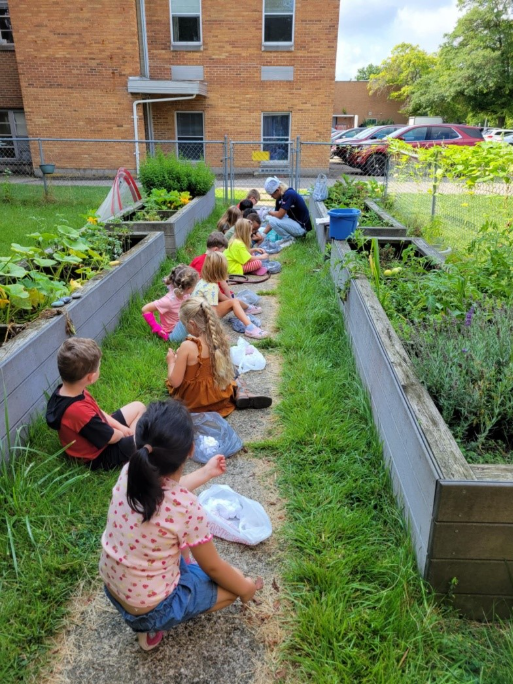
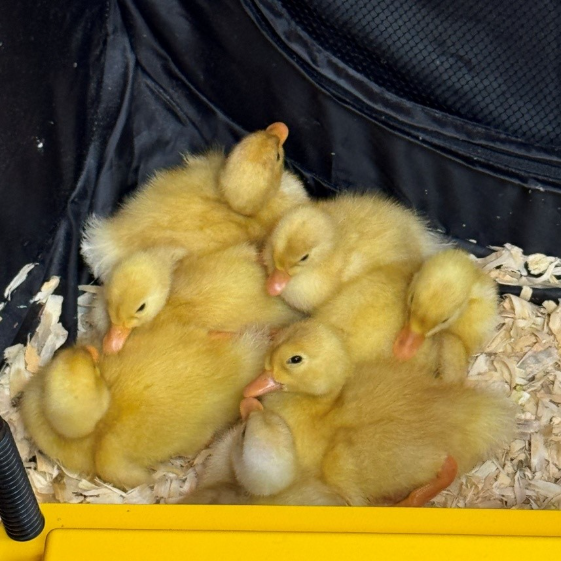
Other activities include conducting botanical science experiments, tending to the resident ducks and chickens, and maintaining a salsa garden. “There is a sense of pride that comes from harvesting vegetables [the older children] planted themselves and then turning those ingredients into something everyone can enjoy,” Conklin said. “Those experiences are memorable because they are authentic. The children aren’t completing a worksheet about plants; they are living the experience from seed to harvest.”
Outdoor education has been central to The Crayon Box’s identity from the onset. “Nature-based learning … isn’t something we recently decided to implement; it has simply always been part of who we are,” Conklin stated. “We don’t separate learning from the outdoors because young children don’t separate them.” She and her fellow teachers believe children learn best by experiencing the world around them.
As fun as the activities are, it’s much more than that. “The impact on the children has been tremendous. We know outdoor learning supports their physical development as well as growth in curiosity, confidence, resilience, creativity, problem-solving and communication,” Conklin said. “Children become careful observers. They ask thoughtful questions, make predictions, solve problems and develop patience … They develop a deeper appreciation for God’s creation.”
Conklin and her colleagues are among the many education professionals who are identifying the virtues of figuratively breaking down their classroom walls and more actively incorporating the great outdoors into the curriculum.
Down the road from The Crayon Box, Village Adventist Elementary School (VAES) formally launched the Outdoor Education Program in the 2020–2021 school year. Cornerstones of the program are annual trips to Mammoth Cave in central Kentucky (sixth graders) and the Florida Keys (seventh graders). Stacy Gusky, travel coordinator for the program and a seasoned veteran in the education field, communicated many valuable insights regarding these memorable excursions.
“Both of these trips are designed to enhance the school’s science programs for grades six and seven,” Gusky said. “The sixth graders spend time studying geology and the origins of the world … The seventh graders study the different biomes of the globe.”
Gusky emphasized the goals that comprise the focus of these trips. “1) Drawing the students closer together through shared experiences … 2) uniting the parents through [participation in various logistics]; 3) helping students to come into a deeper relationship with our Lord and Savior through experiencing His remarkable creative powers and understanding how the world around us demonstrates His power and love,” she listed. “Put all these together, and you have a life-impacting experience — each trip, each year.”
Opportunities to plant gospel seeds in others’ hearts avail themselves quite regularly. “During our trips we are always presented with an opportunity to share who we are and what we believe,” Gusky stated. “People are always amazed at the students’ good behavior, intelligent questions and work abilities.” She alluded to specific testimonies, such as reconnecting someone with the Sabbath after a lengthy prodigal life detour, being an answer to a local employee’s prayer, and making positive impressions on Scouting America national leaders, neighboring campers and outdoor professionals.
When it comes to VAES weaving nature into the curriculum, the Outdoor Education Program has a big brother. Beth Stevenson, first-grade teacher, detailed the school’s garden, which began over a decade ago. She mentioned the impressive infrastructure that currently exists, which includes dozens of raised beds, a mini-barn for storing equipment and supplies, and a timer-run sprinkler system.
The students are actively involved in planting, weeding, and harvesting. The plethora of crops produced in this garden (essentially, a different one in each bed) exceeds some restaurant menus.
“My greatest impetus in running the garden project is the promises from the Bible and Spirit of Prophecy that it is the best way to win my students for Jesus,” Stevenson said. Walking closely with Jesus means embracing the principle of “sharing is caring,” so though the students enjoy the literal fruits (and vegetables) of their labors, they also distribute quite a bit to their families, school staff, church leaders, shut-ins and others in need, and the food pantries at the local Adventist Community Services center and on the Andrews campus.
Roger Dunder, VAES principal, further articulated the prominent role these experiences play in the school fulfilling its mission and vision. “At Village, we seek to implement a holistic model of education in which the spiritual, mental, physical and social dimensions of development are intentionally blended. Nature is an important element of that model,” Dunder expressed. “Alongside strong academic preparation, we prioritize both physical health and spiritual growth.”
Elsewhere in the Mitten State, an extensive Outdoor Education Program is conducted at Camp Au Sable. Gordon Atkins, head naturalist for the camp, crafted a fascinating philosophy for the program:
“Biophilia” is a term used by secular scientists to describe the observation that in all human societies there appears to be a natural affinity towards living things. As Christians, we understand this to be the natural result of all life having originated from a single loving, creative God. …
Exposure to nature is restorative; it instills reverence and amazement with our Creator and builds relationships.
Recently, the term “ecophobia” has been coined by secular scientists to describe the phenomena of the growing fear of the outdoors. … Combating ecophobia through safe and exciting exposure to nature is even more relevant in today’s urban society than it has ever been. Combating ecophobia is evangelistic [emphasis added].
The program is comprehensive. Some of the goals include nature center development, providing training for teachers, primary, secondary and tertiary students, as well as Pathfinders and Adventurers, and impact evaluations.
Wisconsin
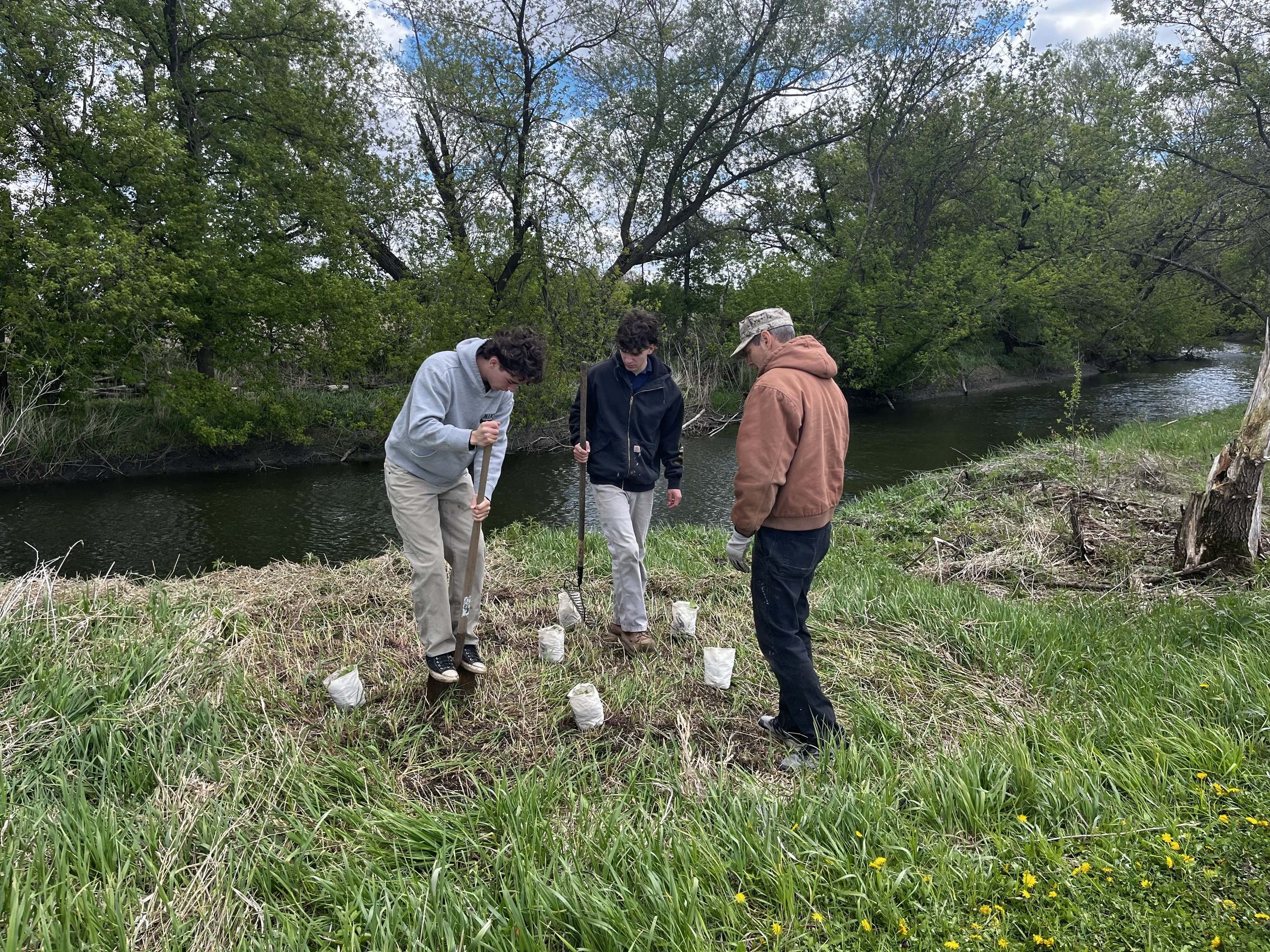
In America’s Dairyland, they are taking environmental stewardship to another level. Derek Timms, principal of Wisconsin Academy, situated along the Crawfish, highlighted a widespread riverfront restoration project jumpstarted by recent graduates Dayle Kurowski and Mahalia Rittenhouse, while they were still students. “The girls worked together to help clear out all of the invasive trees along the river,” he said. “Together, with other students and staff, they also helped us plant new native plants.” Recognizing their “high-quality work,” Timms added, “They started something others will benefit from and continue. Isn’t that the whole point of being a Christian in the first place?”
Restoring the riverfront is a spinoff venture of a more long-term objective. WA is partnering with scientists to save the monarch butterfly population, as the state is a key hub in the international migration to and from Mexico.
Timms pointed back to the conversational catalyst for this initiative. “It was a small group of staff that came together. Mrs. Johanna Serna came to me with the idea for the butterfly garden,” he said. “As we researched her idea, it grew from a small space to a full acre. We seeded the land with seeds … specific to the monarch butterfly.”
This endeavor is offering practice in patience. “We are still waiting for the plants to appear and get established,” Timms confirmed. “It may need to be seeded again and could still take another couple of years before the students are able to participate, but the hope is that they will be able to help us progress in bringing large numbers of monarchs to our campus.”
Timms painted a vivid picture that combines present and future. “When the sun sets, [it] can now reach through the woods and across the river. The difference is incredible! I see … the glow of orange light, orange butterflies and orange flowers. … We hope to add a gazebo someday so the students can sit and look towards that farm with the Sabbath sunset, surrounded by the flowers and butterflies. It will be like living in a postcard!”
Pillar of Adventist Education
These examples of nature-based learning within the Adventist framework represent a pillar of Adventist education. Considering the array of counsel from the pen of inspiration, it would be wise to execute this holistic methodology in even more schools — as many as possible — and move the church much closer to fulfilling the contemporary extrapolation of the divine call to be “the head and not the tail” (Deuteronomy 28:13).
Jesus, the greatest teacher the world ever knew, drew the most valuable illustrations of truth from scenes in nature. Parents, imitate His example, and use the things that delight the senses to impress important truths upon the minds of your children. (White, To Be Like Jesus, 235)
In itself the beauty of nature leads the soul away from sin and worldly attractions, and toward purity, peace, and God. Too often the minds of students are occupied with men’s theories and speculations, falsely called science and philosophy. They need to be brought into close contact with nature. Let them learn that creation and Christianity have one God. Let them be taught to see the harmony of the natural with the spiritual. … Thus the mental powers will be strengthened, the character developed, the whole life ennobled. (White, Christ’s Object Lessons, 24)
This shift in making education more well-rounded is worth celebrating. God placed this charge upon the Israelites then and extends it to His people now to establish beacons of light and life in a dark, dying world.
John Simon is a freelance writer, copyeditor and proofreader based in Berrien Springs, Michigan.