
“Whether you turn to the right or to the left, your ears will hear a voice behind you, saying, ‘This is the way; walk in it.’” — Isaiah 30:21
For a while, I stopped playing.
I had spent years at the piano, studied music in college and became the person people called when they needed an accompanist. But I was tired of being known as the blind pianist. I wanted to be somebody else. So, I turned my back on music.
At first, I thought I was making a decision about my future. Instead, my life began to lose direction. Music had helped carry me through college, but I had never really recognized how much of my life was connected to it. Suddenly, I was looking ahead and seeing very few possibilities. The future did not seem to hold much promise.
My closest friends noticed the change. People usually associated me with smiling and laughing, so they knew something was wrong. They reminded me that I had gifts I was no longer using and eventually convinced me to talk with a therapist.
Because I did not want anyone to know I was seeing a therapist, I found one online. During an early conversation, I told him, “I’m a musician, but I’m no longer a musician.” He asked me to send him a video of myself playing the piano so he could better understand what I did. After watching it, he told me, “Derek, I think I know where the problem is.”
He challenged me to think about my ability differently. God had placed a gift in me, and I was suppressing it, he told me. He compared me to the servant in Jesus’ parable who was entrusted with a talent but buried it instead of using it.
Maybe my problem wasn’t that music had become too much a part of my identity. Maybe I had spent so much energy trying not to be “the blind pianist” that I was rejecting a gift God had given me.
I have been blind for most of my life. When I was about 18 months old, my mother noticed a white spot in my right eye. We lived in a small town in the Philippines where access to extensive health care was limited, and a pediatrician initially told her there was nothing to worry about.
After my family sought several more opinions, doctors diagnosed me with retinoblastoma, a cancer of the eye. Because of a missed early diagnosis, my right eye had to be removed. Doctors tried to save the left one, but by age 3, I had lost both eyes.
Musical Family
Music was already part of our family. My grandfather was known locally as a singer, and my mother came from a musical family. She had noticed that whenever music played, I would drum the rhythms with my feet. Apparently, my rhythm was pretty accurate. My mother, however, wasn’t especially interested in raising a drummer.
Then, an Adventist piano teacher from a larger city began coming to our community during the summers. My mother saw her chance. The teacher had never taught a blind child, but she agreed to try. I was 5 when I had my first piano lesson.
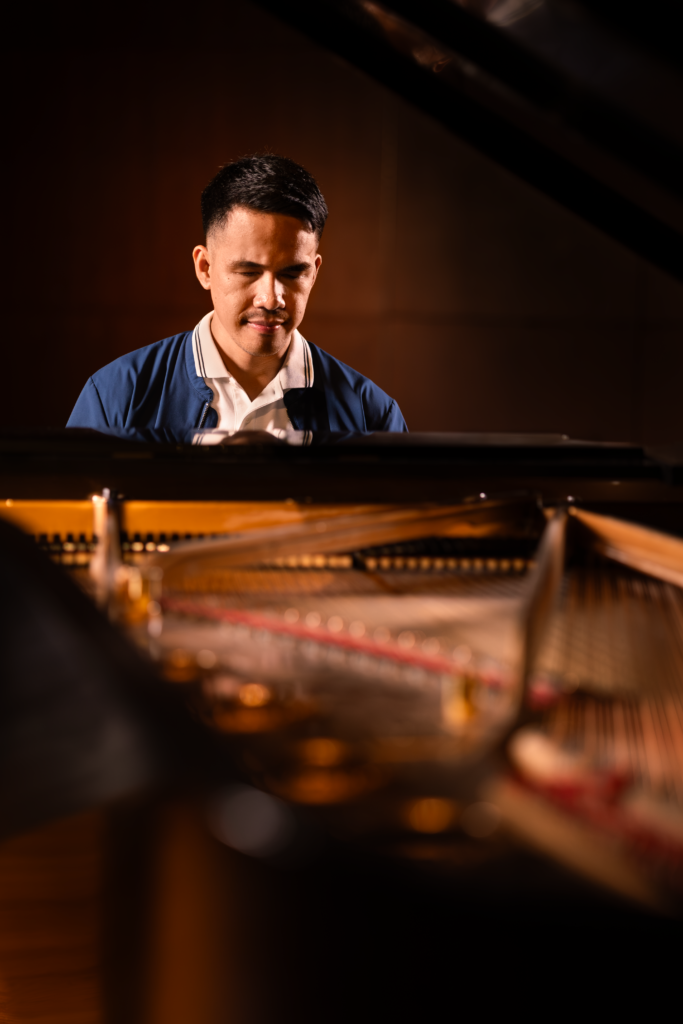
She didn’t immediately sit me down and teach me a song. First, she introduced me to the piano. She talked about how the keys were arranged and helped me understand the length of the instrument. She even opened the piano and explained what was inside so I could understand where the sound came from and how the hammers worked.
She used the Suzuki method, which emphasizes listening. I would listen to recordings and memorize the music. Then she would explain what was happening on the written score, where the rests were, where the ties were, and how everything fit together.
Over time, I began forming a picture of the music in my mind. Believe it or not, I am a very visual person. I may be blind, but I literally have a score in my head. That way of learning has shaped how I accompany people today. Playing with a singer is not simply about knowing the notes. I have to listen closely. I listen to the singer’s breathing. I listen for the inhale before a phrase. It takes a lot of concentration, but listening tells me what comes next.
For many years, church gave me plenty of opportunities to practice that kind of listening. My mother made sure I was involved, and singers frequently needed someone to accompany them. They discovered that I could listen to a recording, figure out the chords and play without needing sheet music.
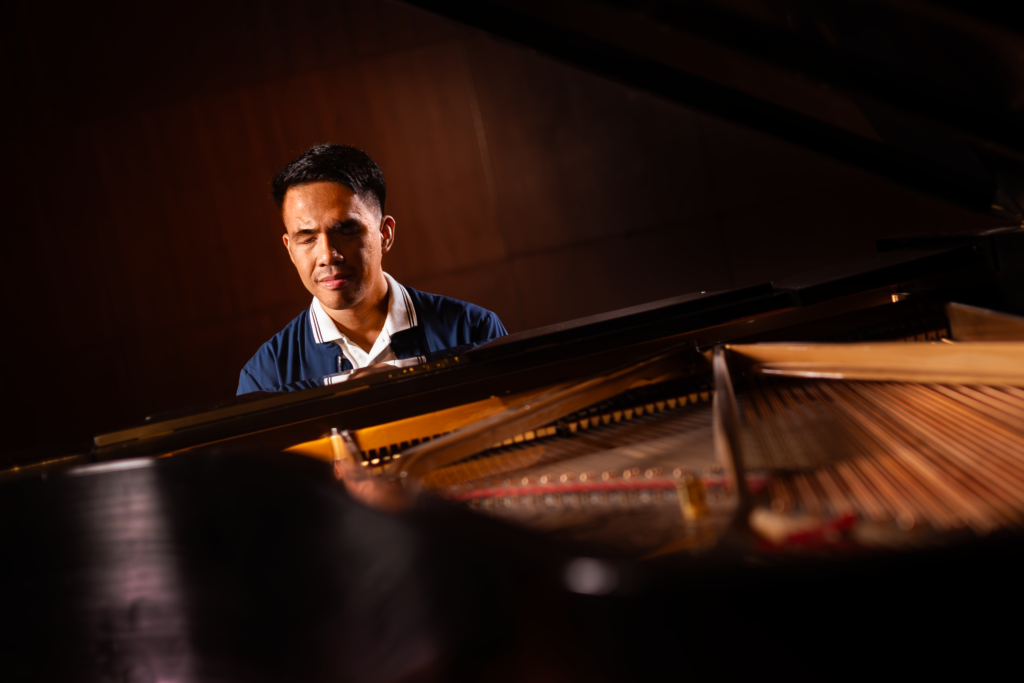
Word spread. Even when I was ready to quit, somebody would call because they needed a pianist. Eventually, I began to understand that perhaps I was looking at the whole thing the wrong way.
With the help of my therapist, it still took months before I could really say, “Yes, this is part of me. This is my talent, and I need to embrace it.”
Eventually, I earned a bachelor’s degree in music with an emphasis in piano pedagogy from Central Philippine Adventist College and today I am a graduate student in piano performance at Andrews University.
‘Looking for Wrong Kind of Miracle’
More importantly, I have begun understanding God’s presence in my life differently. I sometimes describe God as the silent undercurrent in my life. There was a time when I thought knowing God closely meant experiencing dramatic miracles or having Him appear in dreams. I wondered why God did not show Himself to me that way. After all, I had lost my sight. Couldn’t He at least give me some unmistakable sign that He was there?
Over time, I began realizing that perhaps I was looking for the wrong kind of miracle. The fact that I am still moving forward is itself evidence that God has been working. I think of it like riding in a vehicle. You don’t have to see the wheels turning to know they are moving. You know because the vehicle keeps going forward and the scenery changes around you.
That’s what God has been in my life. I may not always see Him working in some dramatic way, but He has always been there, quietly moving my life forward. And if there was a time when my life came to a standstill, perhaps it was because I had stepped away from the gift He was using to move me.
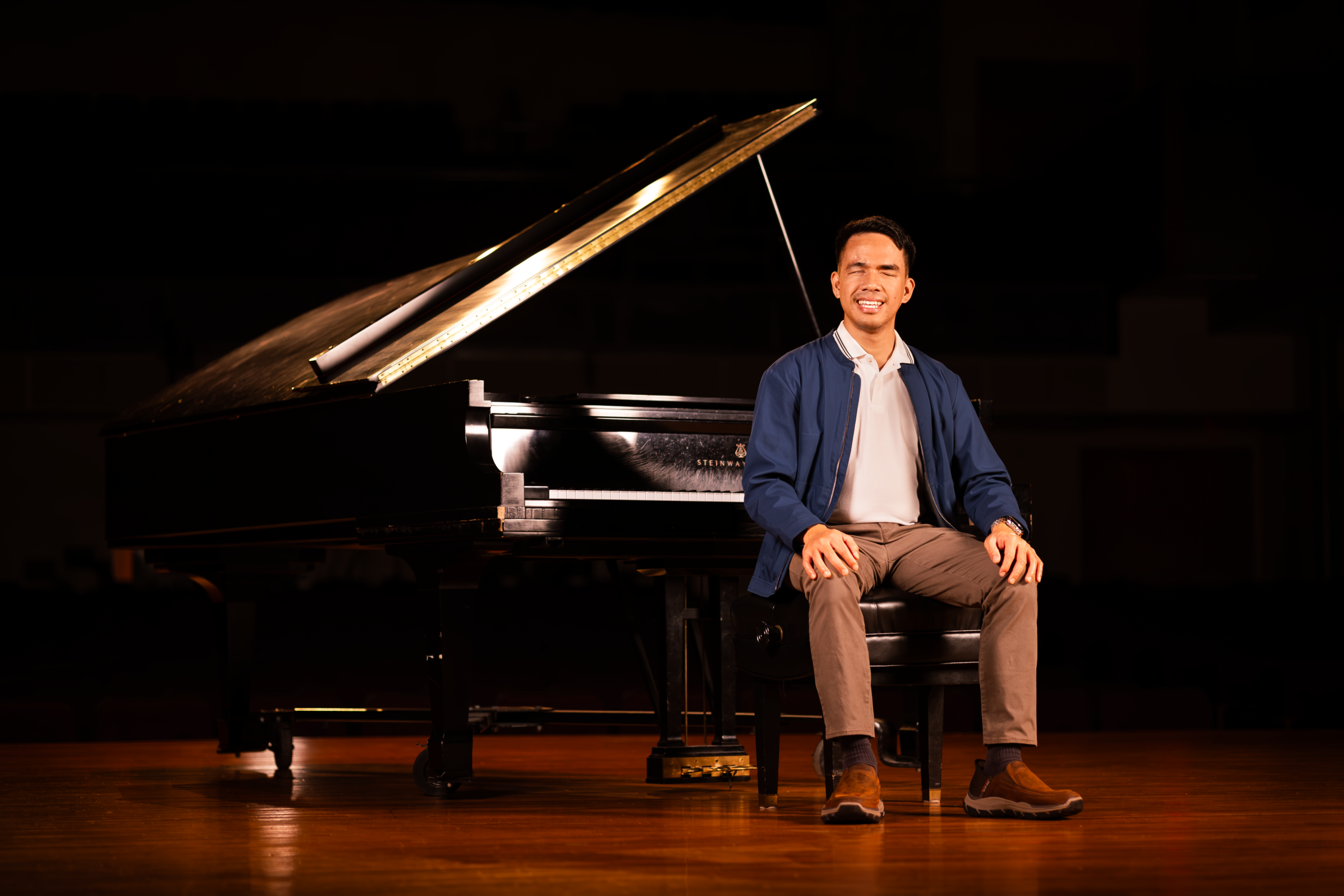
These days, I don’t want to play simply so people will be impressed by what a blind pianist can do. I want the gift of music God has given me to be useful to Him. After years of resisting the identity of “the blind pianist,” I am learning that I don’t have to be defined by my blindness, and I don’t have to run from the piano either.
I simply have to be faithful with what God has placed in my hands. And keep listening for what comes next.
Derek Inapan, as told to Debbie Michel
Photo credit: Nate Reid